


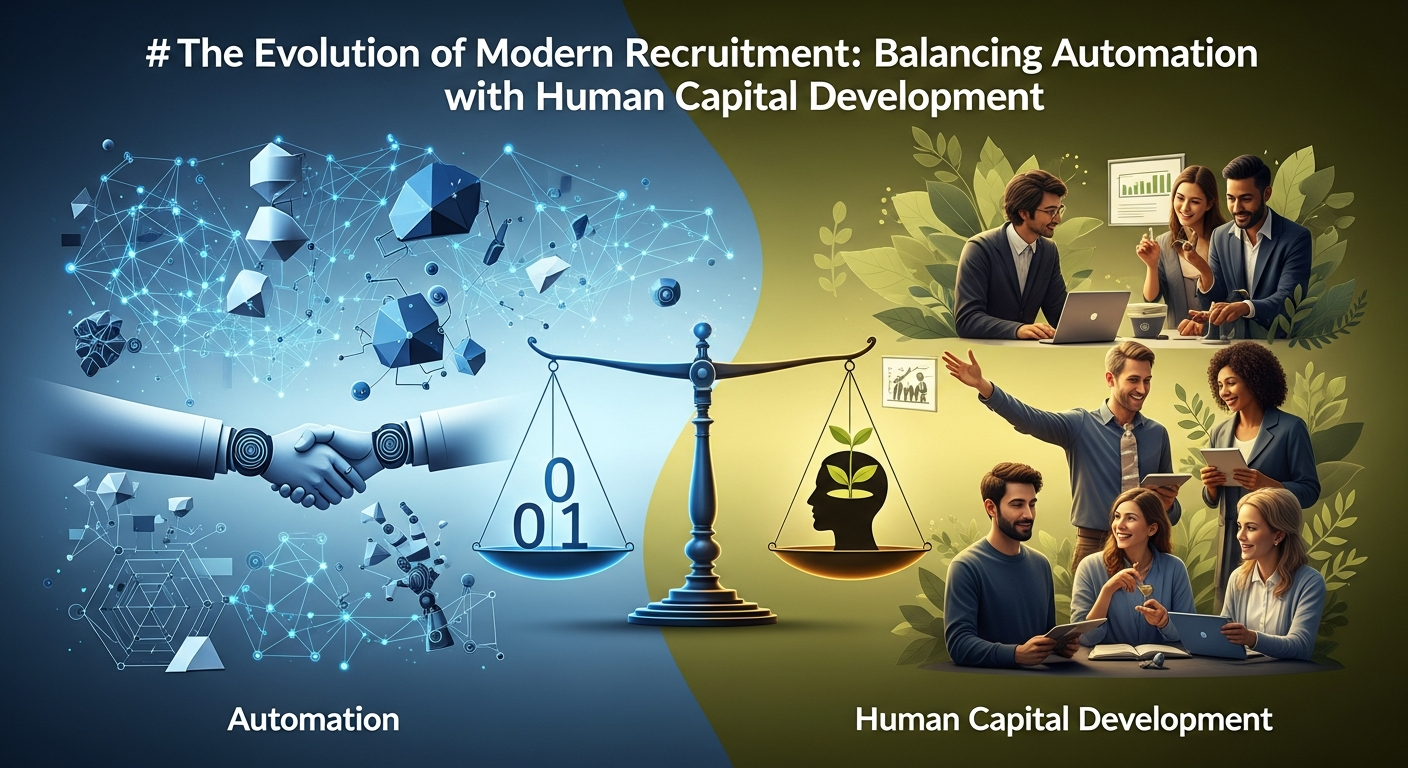
The Evolution of Modern Recruitment: Balancing Automation with Human Capital Development
The global recruitment landscape is undergoing a radical transformation, driven by the dual forces of technological innovation and a renewed focus on workplace inclusivity. As organizations navigate an increasingly complex economic environment, the integration of modern talent acquisition through AI filters and people analytics has moved from a luxury to an operational necessity.
The Rise of the Automated Talent Pipeline
The primary driver behind the adoption of AI in hiring is efficiency. Recent data suggests that approximately 67% of recruiters prioritize AI for its significant time-saving benefits, while 73% of talent acquisition professionals are currently planning to invest heavily in recruitment automation. This shift is most evident in the near-universal adoption of Applicant Tracking Systems (ATS). Today, 99% of Fortune 500 companies utilize these systems to manage and filter candidate data, making it imperative for job seekers to understand current AI recruitment statistics and professional branding to remain competitive in a digital-first market.
Technical Readiness in an AI-Driven Economy
As automation handles the initial screening, the rigor of technical evaluations has intensified. For roles in data science and machine learning, the bar for entry has been raised significantly. Candidates are no longer evaluated solely on general aptitude; they must now demonstrate high-level proficiency in SQL, probability, and quantitative analysis.
This shift toward high-stakes technical environments—ranging from major tech firms to elite hedge funds—has necessitated a “career reboot” for many professionals. Success in this new era requires specialized preparation for interviews that evaluate both product intuition and technical mastery. Resources such as those focusing on acing data science interviews and technical skills have become essential for candidates attempting to navigate these demanding hiring cycles.
Inclusivity and Corporate Social Investment
While technology streamlines the process, the human element remains central to organizational success through Corporate Social Investment (CSI). Leading organizations are moving beyond basic compliance, using Strategic CSI to build core workplace inclusivity and robust internal development pipelines.
To measure the effectiveness of these Human Capital Management (HCM) and Diversity, Equity, and Inclusion (DEI) initiatives, companies often look to external benchmarks. Recognition such as the Brandon Hall Group Excellence Awards serves as a vital indicator of an organization’s commitment to creating sustainable career opportunities and inclusive work environments.
Navigating Global Labor Shifts
These internal changes are occurring within a broader context of global economic restructuring. Regulatory shifts, such as public sector banking consolidations and the emergence of disruptive technologies, are forcing large-scale workforce transitions. These shifts mirror broader trends in global fulfillment, sustainability, and tech innovation, where efficiency must be balanced with ethical growth.
To manage these transitions effectively, organizations are leveraging strategic philanthropy and inclusive hiring practices to support workers through structural changes. By combining the efficiency of AI with a commitment to human development, the modern enterprise can build a resilient, future-ready workforce that is both technologically advanced and socially inclusive.