


ADP vs Paychex: The Best Traditional Payroll for Mid-Sized Businesses
Choosing the right payroll and human capital management (HCM) solution is a pivotal decision for any business, but for mid-sized companies—those typically ranging from 50 to 999 employees—the stakes are particularly high. These organizations often navigate a complex landscape of rapid growth, evolving compliance requirements, and the critical need to retain and attract talent, all while operating with more sophisticated needs than small businesses but without the vast resources of enterprise-level corporations. The platforms must be robust enough to handle increasing employee numbers and intricate HR functions, yet flexible enough to adapt to unique business structures and operational changes. For a broader perspective on payroll options, you might explore comparisons like Rippling vs. Gusto: Which Payroll Software is Best in 2026?.
Two names frequently emerge at the forefront of this decision-making process: ADP and Paychex. Both are industry giants, offering comprehensive services that extend far beyond basic payroll processing. They provide integrated solutions encompassing HRIS functionalities, tax compliance, time and attendance, benefits administration, and employee management tools. However, their approaches, core strengths, and specific offerings for the mid-market can differ significantly, making the “best” choice highly dependent on a business’s unique priorities and growth trajectory.
This article delves into a detailed comparison of ADP and Paychex, specifically through the lens of mid-sized businesses. While ADP is well-known for its comprehensive suite, including ADP Run for small businesses, mid-sized companies will often graduate to more powerful platforms like ADP Workforce Now within the ADP ecosystem. Paychex, conversely, offers a highly integrated suite under the Paychex Flex umbrella, designed to scale seamlessly across business sizes. Understanding these distinctions is crucial for making an informed decision that supports not just current operational efficiency but also future strategic growth.
Understanding the Mid-Market Payroll Imperative
Mid-sized businesses face a distinct set of challenges that necessitate a sophisticated payroll and HCM solution. These include:
* Scalability: The need for a system that can grow with the company, easily accommodating new hires, new departments, and potentially new locations without requiring a complete overhaul.
* Compliance Complexity: As businesses grow, so do their obligations under federal, state, and local labor laws, including wage and hour laws, tax regulations, and benefits administration requirements like the Affordable Care Act (ACA) or COBRA.
* Talent Management: Beyond simply paying employees, mid-sized companies need tools for recruiting, onboarding, performance management, and learning and development to build and retain a competitive workforce.
* Operational Efficiency: Automating payroll, time tracking, and HR tasks frees up valuable resources, allowing HR and finance teams to focus on strategic initiatives rather than administrative burdens.
* Data and Analytics: Access to comprehensive data on labor costs, turnover, performance, and other HR metrics is essential for strategic decision-making and forecasting.
Both ADP and Paychex have built their platforms to address these imperatives, but they do so with nuanced approaches that resonate differently with various business models and management philosophies.

ADP: A Pathway to Comprehensive HCM
ADP, or Automatic Data Processing, is arguably the most recognizable name in the payroll industry, processing over one-sixth of the private-sector payrolls in the U.S. This extensive experience translates into robust systems and deep expertise in payroll and tax compliance, making them a significant player in the HCM space, as detailed on their About Us page.
While ADP Run is specifically designed for businesses with 1-49 employees, it serves as an entry point into a broader ecosystem that easily accommodates mid-sized companies transitioning to more advanced solutions like ADP Workforce Now. This upgrade path is a significant advantage, providing continuity as a company expands its operations and employee base.
Key Offerings for Mid-Sized Businesses (via ADP Workforce Now):
- Core Payroll Processing: ADP Workforce Now provides automated payroll processing, encompassing direct deposit, pay card options, and comprehensive tax filing services. This includes federal, state, and local tax calculations, remittances, and the filing of all necessary forms like W-2s and 1099s. The system is designed to minimize errors and ensure timely payments, reducing the administrative burden on internal teams. Furthermore, its general ledger integration capabilities allow for seamless data flow into accounting systems, streamlining financial reconciliation.
- Advanced HRIS Functionality: For mid-sized businesses, the depth of HRIS features offered by ADP Workforce Now is often a deciding factor. It moves beyond basic employee records to include:
- Talent Acquisition: Tools for applicant tracking, onboarding new hires, and managing the entire recruitment lifecycle, including background checks, e-signatures, and automated workflows. For specific insights into applicant tracking systems, consider our comparison of JazzHR vs. Breezy HR: Best Budget ATS for Startups?.
- Performance Management: Features for setting goals, conducting performance reviews, and tracking employee development, fostering continuous improvement and identifying top talent.
- Learning Management: Integration with learning platforms to provide training courses, track certifications, and support employee skill development, vital for growth and compliance.
- Benefits Administration: A robust module for managing health, dental, vision, and retirement plans. It automates eligibility tracking, open enrollment, and deductions, reducing manual effort and potential errors. ADP provides strong compliance assurance for regulations such as the Affordable Care Act (ACA) and Fair Labor Standards Act (FLSA), helping mid-sized businesses navigate complex legal landscapes.
- Time and Attendance: ADP offers flexible solutions for time tracking, including web-based time clocks, mobile apps, and integration with physical time clocks. This allows for accurate recording of employee hours, breaks, and overtime, directly impacting payroll accuracy and compliance with wage and hour laws. The system also supports scheduling and PTO (Paid Time Off) management, providing employees with self-service options to request time off and managers to approve it.
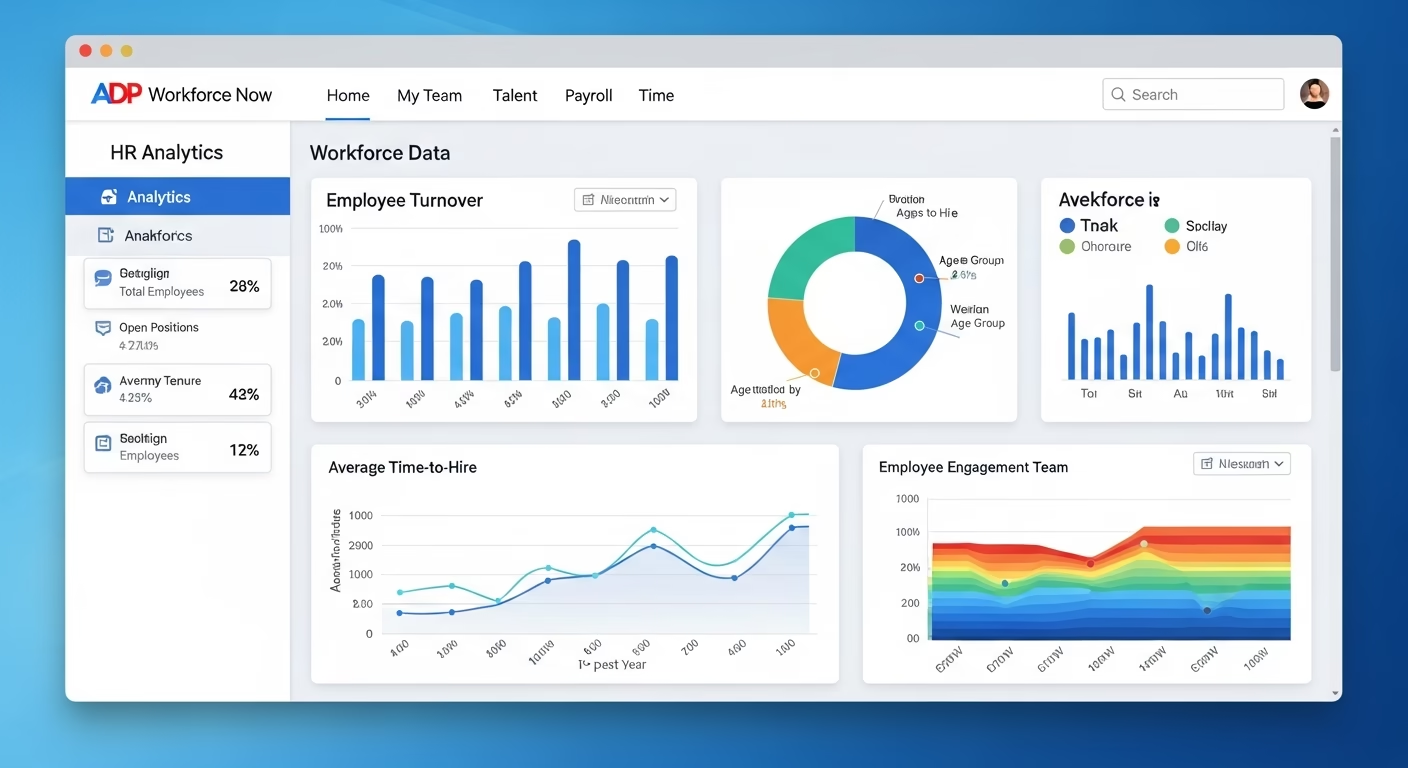
- Reporting and Analytics: One of ADP’s core strengths lies in its robust reporting and analytics capabilities. Businesses can generate a wide array of reports on payroll costs, HR metrics, compliance data, and workforce trends. These insights are invaluable for strategic planning, budgeting, and identifying areas for operational improvement. Dashboards provide a clear overview of key performance indicators (KPIs), enabling data-driven decision-making.
- Employee Self-Service: ADP offers comprehensive employee self-service portals and mobile apps, empowering employees to access pay stubs, update personal information, view benefits, request time off, and manage tax withholdings. This reduces the administrative burden on HR teams and improves employee satisfaction by providing convenient access to their information.
ADP’s extensive market penetration and long-standing presence mean it has developed a highly refined suite of services and a strong understanding of compliance requirements across various industries. Its integrated approach aims to provide a singular platform for all HR and payroll needs as a business scales.
Paychex: The Integrated and Service-Oriented Approach
Paychex serves over 1.6 million clients worldwide, demonstrating significant scale and a strong presence across businesses of all sizes, with a particularly competitive offering for the mid-market. Paychex positions itself as a comprehensive, integrated suite, often highlighted for its personalized service model and tailored solutions. This focus on direct guidance and support can be particularly appealing to mid-sized firms that value a more hands-on partnership.
Key Offerings for Mid-Sized Businesses (via Paychex Flex):
- Comprehensive Payroll and Tax Administration: Paychex Flex delivers automated payroll processing, including direct deposit, pay cards, and check signing. Its tax administration services are robust, covering federal, state, and local tax filings, calculations, and remittances. Paychex guarantees tax calculation accuracy and timely filing, which provides significant peace of mind for businesses concerned about penalties. They also handle W-2 and 1099 form generation and distribution, simplifying year-end processes.
- Integrated HR Suite: Paychex Flex offers a broad and customizable range of HR services, designed to manage the entire employee lifecycle. These features include:
- HR Library and Resources: Access to an extensive library of HR documents, templates, and compliance guides, invaluable for mid-sized businesses that may not have dedicated HR legal counsel.
- Dedicated HR Specialists: A significant differentiator for Paychex is its emphasis on providing dedicated HR specialists or consultants. These specialists offer personalized guidance on HR best practices, compliance issues, employee relations, and strategic planning.
- Employee Handbooks and Policy Development: Assistance in creating and updating employee handbooks and HR policies, ensuring compliance and reflection of company culture.
- Benefits Administration: Comprehensive management of health insurance, retirement plans (including 401(k) services), and other ancillary benefits. Paychex helps with plan selection, enrollment, and ongoing administration, simplifying complex benefits processes.
- HR Outsourcing (HRO) and PEO Services: For mid-sized firms looking to offload significant HR complexities, Paychex offers HR outsourcing and Professional Employer Organization (PEO) services. A PEO allows a business to co-employ its employees with Paychex, granting access to more robust benefits packages, compliance expertise, and reduced administrative burden, often at a lower cost than managing everything internally. This can be a compelling option for growth-oriented companies seeking to streamline operations and mitigate risk.
- Time and Attendance Management: Paychex provides a highly integrated suite of time and attendance solutions. This often includes a broader range of proprietary time clock hardware options alongside web-based and mobile time tracking. Features cover employee scheduling, real-time attendance monitoring, geofencing for mobile clock-ins, and robust PTO management. The integration between time tracking and payroll is typically seamless, reducing manual data entry and errors.
- Employee Self-Service: Similar to ADP, Paychex offers employee self-service portals and mobile apps, enabling employees to view pay stubs, manage direct deposit information, access benefits details, and submit time-off requests. This fosters greater employee autonomy and reduces inbound inquiries to HR.
- Performance and Learning: Paychex Flex also includes modules for performance management, allowing businesses to set goals, track progress, and conduct evaluations. Learning management capabilities support employee development and compliance training, contributing to a more skilled and engaged workforce.
Paychex’s approach often emphasizes a more consultative, personalized relationship, which can be a strong draw for mid-sized companies that value having a dedicated partner to navigate HR and payroll challenges. This is reflected in their customer support model and their willingness to tailor solutions.

Comparative Analysis for Mid-Sized Businesses: A Deeper Dive
The decision between ADP and Paychex for a mid-sized business often boils down to a granular comparison of specific features, service models, and long-term strategic fit.
1. Payroll & Tax Compliance
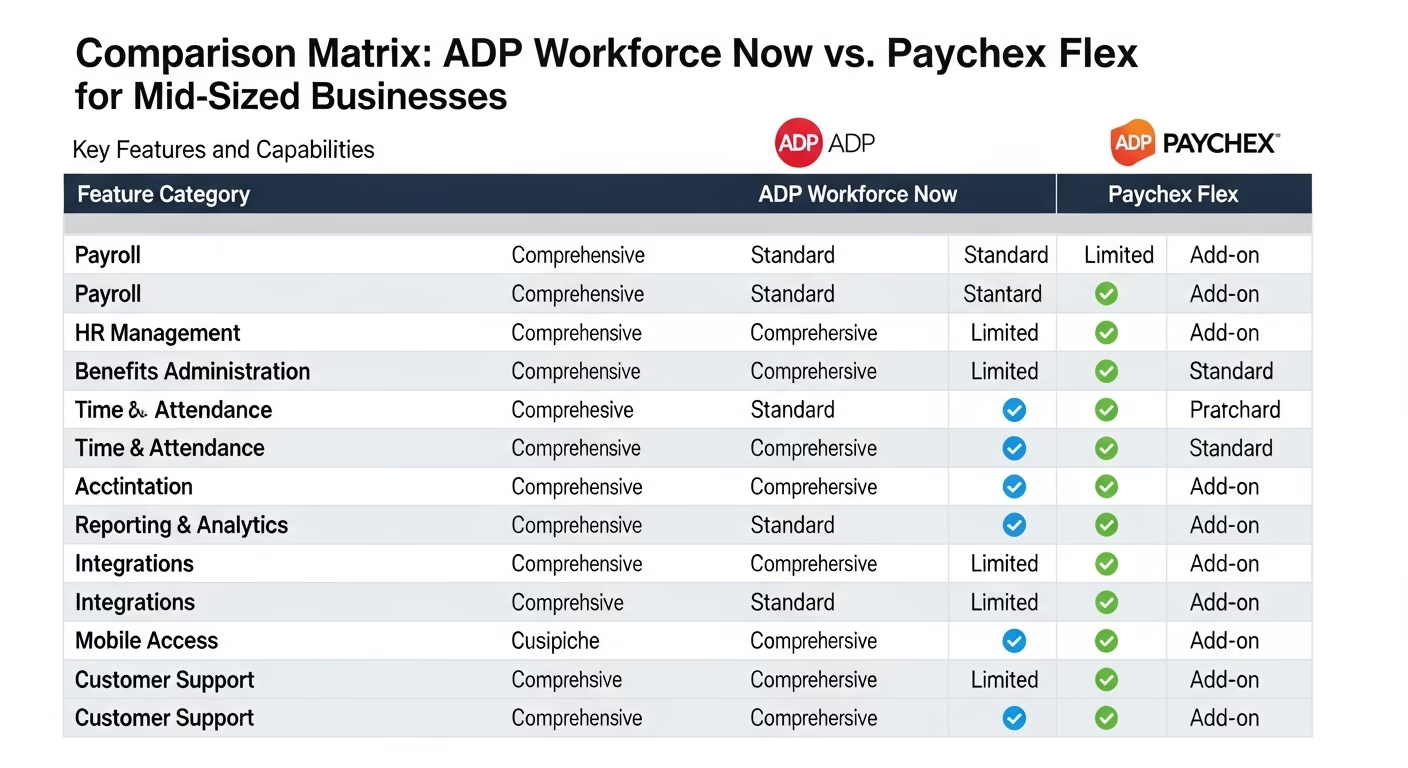
Both ADP and Paychex are industry leaders in automated payroll processing, direct deposit, and comprehensive tax filing (federal, state, and local). They both guarantee accuracy and timeliness in tax remittances.
- ADP’s Strength: ADP, given its sheer volume and long history, is often cited for its profound compliance expertise and integrated analytics that can flag potential issues proactively. Their systems are built to handle highly complex scenarios and provide detailed audit trails.
- Paychex’s Strength: Paychex offers robust tax services with explicit guarantees for accuracy and timely filing, which provides significant peace of mind. Their dedicated specialists can also offer hands-on guidance through specific tax challenges.
For mid-sized businesses, the difference might lie in the proactive insights offered by ADP’s analytics versus the personalized guidance available from Paychex’s specialists when navigating intricate tax or compliance situations. Both capably handle W-2 and 1099 forms, but the experience of resolving a unique issue might vary.
2. HRIS Features
This is a critical area where the depth and breadth of offerings can significantly impact a mid-sized business’s operational efficiency and strategic HR initiatives.
- ADP’s Strength (Workforce Now): ADP’s Workforce Now is known for its extensive and deeply integrated HRIS modules. It excels in talent acquisition, offering sophisticated applicant tracking systems (ATS) and seamless onboarding. Its performance management tools support intricate review cycles, and its learning management system (LMS) integrations are designed for comprehensive employee development. The benefits administration module is highly robust, crucial for managing a growing and diverse workforce, with specific features addressing ACA compliance and other complex benefits regulations. The strength here is a highly integrated, data-rich environment for managing all facets of the employee lifecycle.
- Paychex’s Strength (Paychex Flex): Paychex Flex offers a broad range of HR services, with a notable emphasis on practical support for HR generalists or small HR teams. The HR library resources, dedicated HR specialists, and assistance with employee handbooks and policy development are invaluable for businesses that need hands-on guidance. The true differentiator for Paychex in the HRIS space is its strong HRO and PEO options. For mid-sized businesses contemplating outsourcing a significant portion of their HR functions or seeking access to large-group benefits, Paychex’s PEO can be a highly attractive and cost-effective solution, enabling them to offload compliance risks and administrative burdens.
The choice here often depends on whether a business prefers to build out an internal, data-driven HR function supported by a robust platform (ADP) or lean on an external partner for significant HR operational support and expertise (Paychex, especially with PEO).
3. Employee Management: Time, Attendance & PTO
Both platforms provide essential tools for managing employee work hours and time off, which are fundamental to accurate payroll.
- ADP’s Approach: ADP offers flexible solutions that integrate with a wide array of time collection methods, including web-based, mobile, and various third-party time clocks. This flexibility is good for businesses with diverse employee types or work environments. Its scheduling tools are robust, and PTO management is standard, all feeding seamlessly into payroll.
- Paychex’s Approach: Paychex often provides more integrated, proprietary time clock hardware and software options, which can offer a more cohesive user experience. Their time and attendance system typically features advanced capabilities like geofencing for mobile clock-ins and real-time alerts. The integration with payroll is very tight, minimizing discrepancies.
For businesses looking for a unified, often proprietary hardware/software solution for time tracking, Paychex might offer a more streamlined experience. For those with existing time clock infrastructure or specific integration needs, ADP’s flexibility might be advantageous. Employee self-service portals for viewing pay stubs, managing personal info, and requesting PTO are standard on both platforms.
4. Scalability
As mid-sized businesses are inherently in a state of growth, the ability of their payroll and HCM platform to scale is paramount.
- ADP’s Ecosystem: ADP offers a clear and well-trodden path from small business solutions (Run) to mid-market (Workforce Now) and up to enterprise-level platforms. This ensures continuity and avoids the disruptive process of switching vendors entirely as a company grows. The modular nature of Workforce Now means features can be added as needed, accommodating increasing employee counts, new geographic locations, or more complex HR requirements.
- Paychex’s Flexibility: Paychex Flex is designed from the ground up to be highly scalable. Its modular structure allows businesses to add or remove services as their needs evolve, from basic payroll to comprehensive HR management, benefits, and PEO services. This inherent flexibility means a business can start with core payroll and gradually layer on more sophisticated features without having to switch platforms.
Both platforms offer excellent scalability, but ADP provides a more defined “upgrade path” between distinct product lines, while Paychex offers a more “build-your-own-suite” modularity within a single core platform.
5. Integrations
Seamless integration with other critical business software is vital for mid-sized businesses to maintain data integrity and operational efficiency.
- Common Ground: Both ADP and Paychex provide integrations with popular accounting software like QuickBooks and Xero, as well as various enterprise resource planning (ERP) systems and other business applications. This often occurs via direct integrations or application programming interfaces (APIs).
- Varying Breadth: The specific breadth and ease of these integrations can vary. ADP, with its larger ecosystem, often boasts a wider array of established direct integrations with major business software vendors. Paychex also offers a strong set of integrations, particularly with accounting software and within its own suite of services.
When evaluating integrations, mid-sized businesses should map out their existing technology stack and verify the specific integrations offered by each vendor to ensure critical data flows smoothly without manual intervention.
6. Customer Support
The quality and style of customer support can significantly impact a business’s experience, especially when dealing with time-sensitive payroll issues or complex HR queries.
- Paychex’s Model: Paychex is frequently highlighted for its personalized, dedicated service model. Clients often have direct access to a specific payroll or HR specialist, fostering a more intimate and consistent relationship. This can be highly beneficial for mid-sized businesses that appreciate having a go-to person who understands their unique needs and history.
- ADP’s Model: ADP offers multiple tiers of support, including extensive online resources (knowledge bases, FAQs), phone support, and dedicated account representatives, especially for larger or higher-tier clients. While its support can be highly effective, experiences can vary depending on the chosen service level and the specific issue. For smaller issues, self-service options are prevalent.
The choice here often comes down to preference: a dedicated, consistent point of contact (Paychex) versus a robust, multi-channel support system (ADP), where the level of personalized attention may depend on your contract.
7. Pricing
Both ADP and Paychex utilize a subscription-based pricing model, typically consisting of a base fee plus a per-employee, per-pay-period charge. Additional modules or advanced features usually incur extra costs.
- Transparency: Neither company generally publishes transparent, fixed pricing online. Instead, they provide custom quotes based on a business’s specific needs, including the number of employees, chosen features, pay frequency, and required service level.
- Bundled Services: Paychex may offer more bundled services, particularly when combining payroll with HR outsourcing or PEO services. This can sometimes lead to cost efficiencies for businesses seeking a comprehensive solution from a single vendor. ADP’s modular approach, while flexible, might require careful management of added costs for each feature.
Mid-sized businesses should engage in a thorough quoting process with both vendors, clearly outlining all desired features, expected employee growth, and service expectations to get an accurate comparison of total cost of ownership. It’s also crucial to inquire about potential hidden fees or additional charges for setup, year-end processing, or specific reports. Investopedia provides a useful overview, noting that “both companies offer competitive, customizable pricing, and the final cost often depends on the features chosen, the number of employees, and the pay frequency.” Business.org further emphasizes the need for custom quotes due to the varying feature sets.
Conclusion: Making the Right Choice for Your Mid-Sized Business
Deciding between ADP and Paychex for a mid-sized business is not a matter of one being universally “better” than the other. Instead, it hinges on a deep understanding of your organization’s specific needs, strategic priorities, preferred operational model, and budget. Both are exceptionally capable and reliable providers, each with distinct strengths that cater to different business philosophies.
If your mid-sized business prioritizes a highly integrated, feature-rich platform with robust compliance assurance, advanced analytics, and a clear upgrade path within a single ecosystem as you grow, ADP Workforce Now likely aligns well with your needs. It’s particularly strong for companies that want extensive control over their data, sophisticated reporting, and a comprehensive HR backend to manage the full employee lifecycle internally, with the flexibility to integrate with various other systems.
Conversely, if your mid-sized business seeks a highly integrated, service-oriented solution with personalized support, comprehensive HR outsourcing options, and potential cost efficiencies through bundled services, Paychex Flex (especially with its PEO offerings) might be the stronger contender. It’s ideal for businesses that value having a dedicated HR and payroll partner to offload complexities, navigate compliance with direct guidance, and potentially access better benefits packages through a PEO model.
Ultimately, prospective buyers should conduct a thorough due diligence process, which includes:
1. Detailed Needs Assessment: Clearly define your current payroll, HR, time, and benefits requirements, as well as anticipated future growth and feature needs.
2. Custom Demos: Request personalized demonstrations from both vendors, focusing on the features most critical to your business.
3. Reference Checks: Speak with existing clients of similar size and industry to gather real-world feedback on implementation, support, and overall satisfaction.
4. Transparent Quoting: Obtain detailed, itemized quotes from both providers, ensuring all potential costs are included and comparing apples to apples.
5. Long-Term Vision: Consider how each platform aligns with your company’s long-term growth strategy, culture, and desired level of internal HR involvement.
By meticulously evaluating these factors, mid-sized businesses can confidently select the payroll and HCM partner that best supports their operational excellence, compliance needs, and strategic objectives for sustained growth and employee success.