


The Rise of Agentic AI: Orchestrating Autonomous Multi-Agent Systems
The landscape of artificial intelligence is undergoing a fundamental transformation, shifting from simple prompt-response cycles toward a paradigm known as Agentic AI. This evolution is characterized by orchestrated autonomy, dynamic task decomposition, and persistent memory. Unlike traditional models that function as reactive tools, Agentic AI systems act as goal-driven entities capable of planning and executing complex, multi-step tasks with minimal human intervention. This shift is particularly evident as organizations adapt to the future of hiring and AI recruitment trends, where autonomous agents begin to handle high-level decision-making.
Understanding Multi-Agent Systems (MAS)
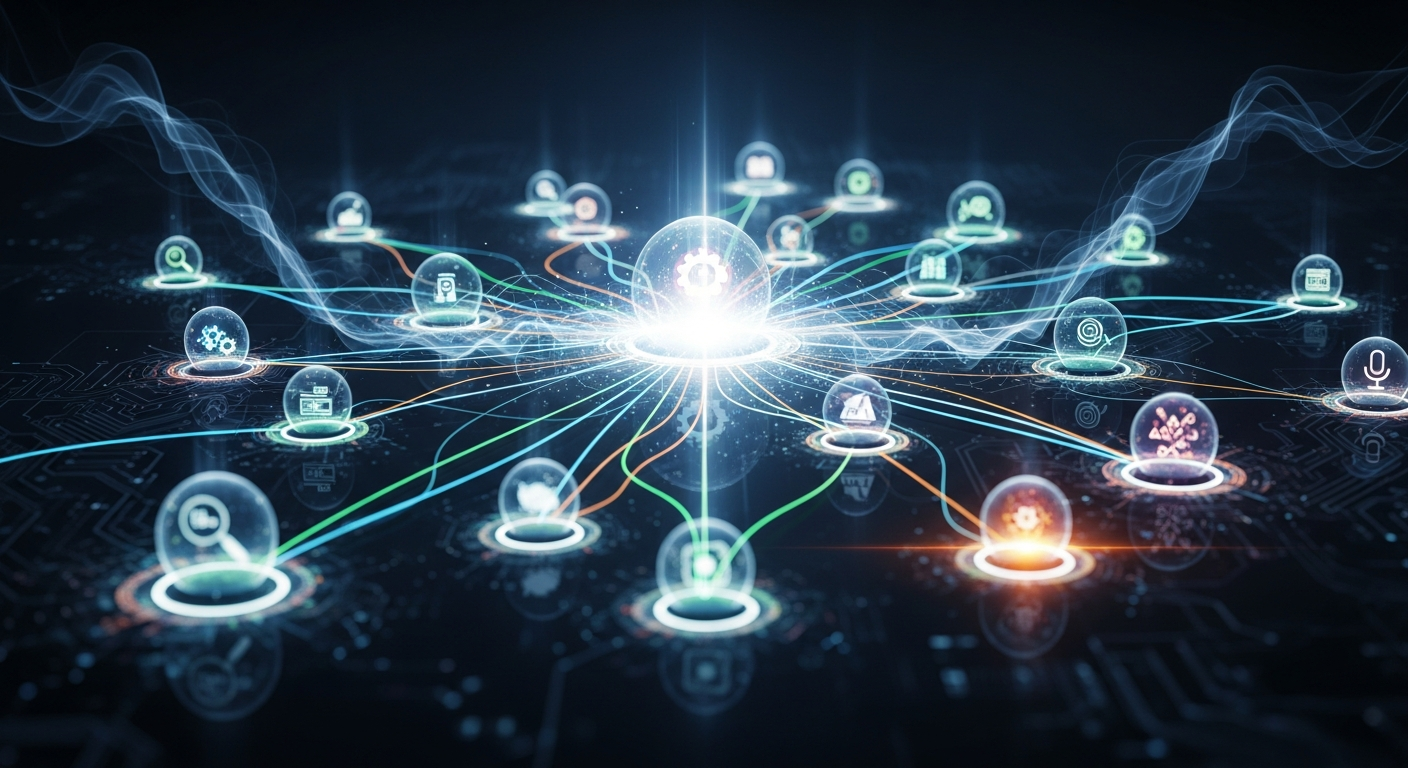
In professional environments, this shift is most visible through the implementation of Multi-Agent Systems (MAS). In these frameworks, specialized agents collaborate under centralized or decentralized protocols to solve niche problems. This structured approach is a core component of this conceptual taxonomy of agentic AI, which highlights how modern systems transition from basic assistants to autonomous planners. By utilizing these specialized agents, organizations can move the burden of workflow management from the human user to an orchestration layer that manages both sequential and parallel sub-tasks.
Vertical Integration through Compound AI
Vertical-specific integration is increasingly defined by “Compound AI” architectures. Recent analysis of enterprise deployments suggests that high-performing systems no longer rely on generic LLM wrappers. Instead, they utilize domain-specific planners and protocols to embed industry-specific logic—such as legal constraints or medical research parameters—directly into the task execution chain.
This maturation process mirrors the industry-wide transition from legacy ATS to AI-driven talent intelligence, where data silos are replaced by integrated, intelligent ecosystems. A prime example of this in practice is Anthropic’s multi-agent research system, which leverages multiple agents to explore topics recursively, synthesize findings, and validate data points autonomously.
Privacy and RAG-Powered Local AI Workflows
Privacy and data security remain paramount in this new era, leading to the rise of privacy-first local AI workflows. By integrating Retrieval-Augmented Generation (RAG) with personal knowledge bases, agents can access private, localized data repositories to maintain context and accuracy.
This architecture allows agents to “remember” past interactions and specialized documentation without exposing sensitive information to public cloud models. Consequently, these RAG-powered systems create a localized loop for task execution, supporting long-term autonomy and ensuring that the AI operates within the specific data constraints of the organization.
As frameworks like crewAI and specialized research chains continue to mature, the shift toward autonomous task execution will only accelerate. By leveraging persistent memory and recursive synthesis, modern AI agents are becoming indispensable partners in professional workflows, capable of managing the entire lifecycle of a project from initial planning to final validation.