


Deel vs. Remote.com: Best Platform for Hiring International Contractors?
The modern workforce is no longer tethered to geographic boundaries. As the digital economy matures, the competition for talent has shifted from local markets to a global stage, driven by the compelling advantages of accessing specialized skills and fostering diverse perspectives. Companies today can find exceptional software engineers in Lagos, innovative designers in Buenos Aires, or sharp marketing specialists in Warsaw, broadening their talent pools exponentially. However, this global reach introduces a labyrinth of legal, financial, and administrative hurdles that can quickly overwhelm even seasoned HR and finance departments. Navigating international contractor compliance, localized tax obligations, and cross-border payroll in-house is, for most scaling companies, an operational nightmare. The risks of non-compliance are severe, ranging from hefty fines and back-tax liabilities to damaged reputations and protracted legal battles.
Enter Deel and Remote.com—the two titans of the Global Employment Organization (GEO) and Employer of Record (EOR) space. These platforms have emerged as essential partners for businesses looking to embrace global hiring without shouldering the full burden of international legal and administrative complexities. While both platforms offer a comprehensive suite of tools designed to hire, pay, and manage talent worldwide, they approach the problem with distinct philosophies, innovative features, and underlying infrastructure. This deep-dive comparison aims to provide a granular analysis, exploring which platform offers the superior choice for managing international contractors in the current, rapidly evolving regulatory landscape. Understanding their core differences is paramount for companies seeking to optimize their global operations and minimize risk.
The Core Conflict: Why International Contractor Management Matters So Critically
Before dissecting the specific offerings of Deel and Remote.com, it is essential to fully grasp the stakes involved in international contractor management. Simply sending a digital transfer to a contractor in another country is far from sufficient. Companies face three primary, interconnected risks that, if unaddressed, can lead to significant financial and legal repercussions:
- Misclassification: This is perhaps the most pervasive and dangerous risk. If an individual is classified as an independent contractor but performs duties, operates under conditions, or exhibits behaviors more characteristic of an employee—such as following a set schedule, being integrated into the company’s internal structure, using company equipment, or working exclusively for one client—the company faces potential misclassification. Regulatory bodies worldwide are increasingly scrutinizing the gig economy. In 2023, for instance, several European countries and the US Department of Labor tightened their definitions of “independent contractors,” making compliance a high-priority risk for HR departments. The penalties can include massive fines, retroactive tax liabilities (for both employer and employee contributions), interest, and statutory penalties, alongside potential lawsuits for unpaid benefits and wages. This risk is amplified across borders, where labor laws vary wildly and often conflict.
- Intellectual Property (IP) Transfer: For many businesses, especially those in the technology, creative, and research sectors, intellectual property is their primary asset. Ensuring that IP created by a developer in, say, a foreign jurisdiction like Germany or India, legally belongs to the hiring company requires robust, localized contracts that adhere to specific civil codes and common law precedents. Without specific clauses that are legally enforceable in the contractor’s jurisdiction, a company may find it does not actually own its source code, designs, or proprietary research. This can lead to critical disputes, loss of competitive advantage, and even the inability to commercialize products.
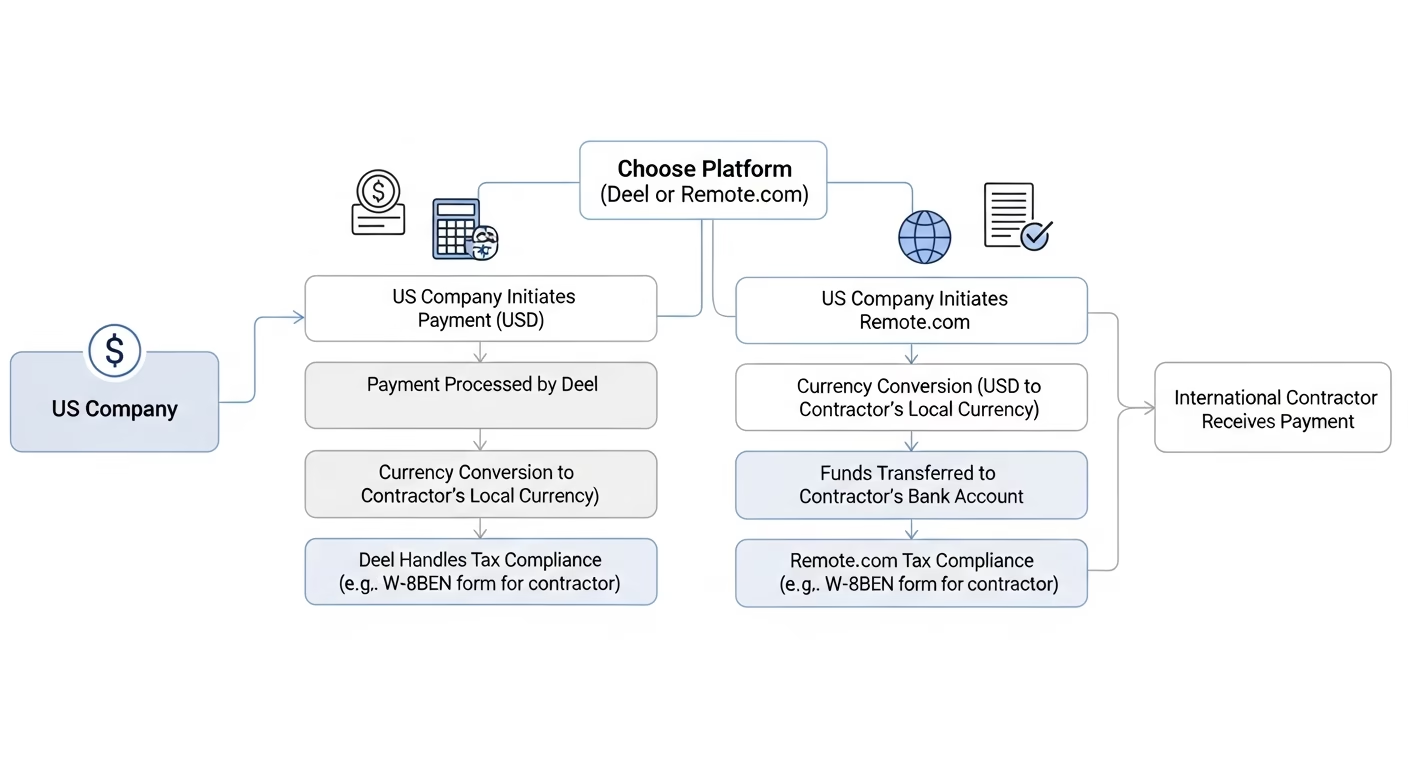
- Payment Friction and Tax Compliance: Dealing with international payment systems is inherently complex. SWIFT fees, fluctuating currency exchange rates, varying banking holidays, and the need to comply with local tax reporting requirements for remittances can become a full-time job for finance departments. Beyond the logistical headache, incorrect tax withholding or reporting can lead to fines from international tax authorities, impacting the company’s financial standing and reputation. Furthermore, contractors often prioritize reliable, timely, and flexible payment options, making payment friction a potential deterrent for attracting top global talent.
Deel and Remote.com both promise to solve these intricate issues, but their methods of execution, technological infrastructure, and strategic priorities differ significantly, making the choice between them a critical strategic decision for any globally-minded company.
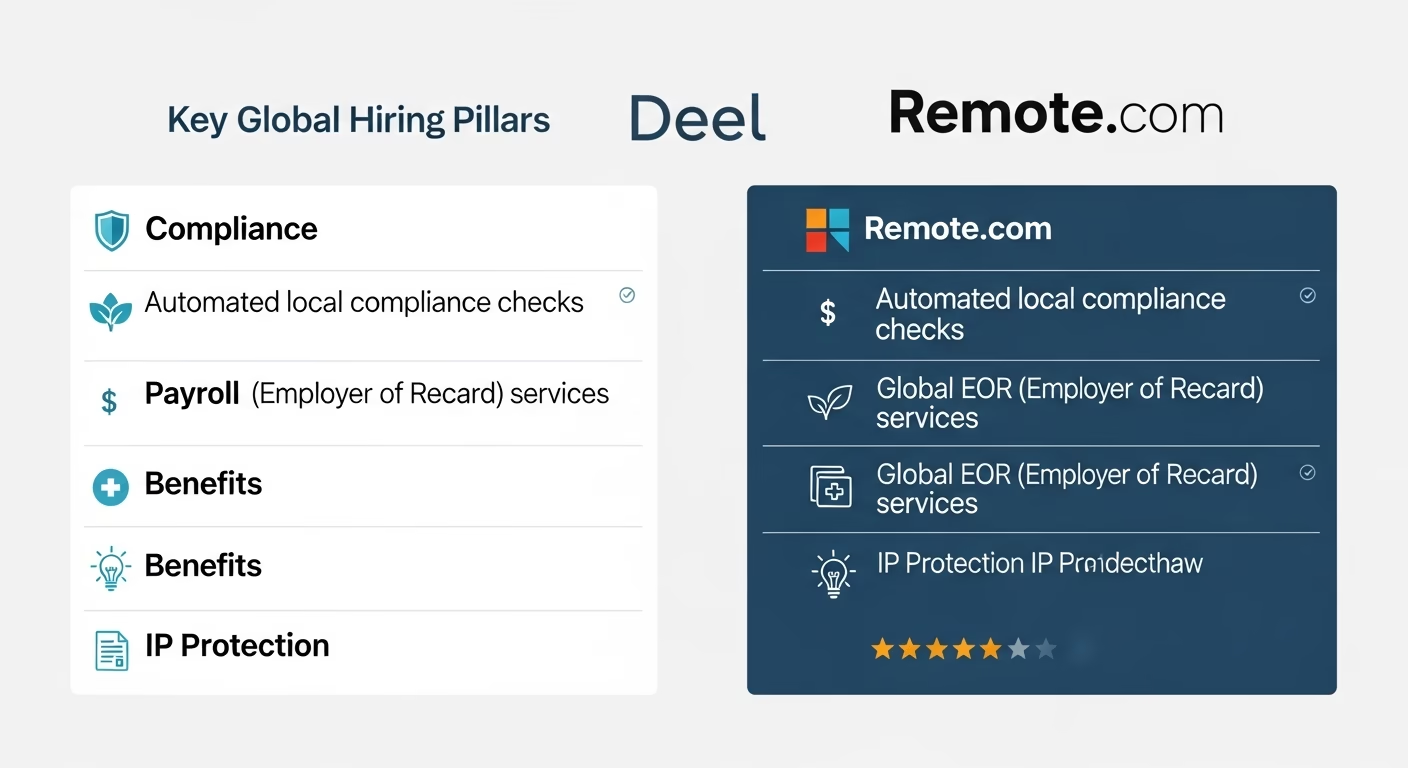

Deel: The Fast-Moving Powerhouse
Founded in 2019, Deel rapidly ascended to a remarkable $12 billion valuation by positioning itself as the “all-in-one” HR platform for global teams. Its explosive growth trajectory underscores a market demand for agility and comprehensive solutions. Deel is built for speed, flexibility, and expansive reach, catering to startups and enterprises that need to scale across dozens of countries simultaneously, often with a “hire anywhere” philosophy. Its technology-first approach emphasizes automation and a contractor-centric payment experience.
Key Features for Contractor Management
Deel’s contractor suite is arguably the most comprehensive and technologically advanced in the market, designed to streamline the entire lifecycle from onboarding to offboarding. Its robust platform allows companies to onboard a new contractor in a matter of minutes, minimizing administrative delays and allowing teams to focus on core business objectives.
- Localized Contracts and Compliance: A cornerstone of Deel’s offering is its extensive library of contracts, meticulously drafted and continuously updated by local legal experts in over 150 countries. This is crucial because a contract legally binding in the United States might be unenforceable or even illegal in Spain or Japan. Deel’s system automatically generates contracts that comply with the specific labor laws, tax regulations, and cultural nuances of each jurisdiction. This proactive approach ensures that a contract signed today remains compliant next year, safeguarding companies against the ever-changing tides of international labor law. This is particularly vital when considering the subtle differences in “at-will” employment, termination clauses, and intellectual property assignment across different legal systems (e.g., common law vs. civil law). For more details on their global compliance solutions, you can visit Deel’s official platform.
- Deel Card and Salary Advance: One of Deel’s truly unique selling points, rooted in its fintech approach, is the Deel Card. This physical or virtual debit card allows contractors to spend their earnings directly in USD or other major currencies without the delays and fees associated with traditional bank transfers. This significantly improves financial liquidity and convenience for contractors, especially in regions with less developed banking infrastructure or volatile local currencies. Furthermore, Deel offers salary advances, providing a crucial financial safety net for talent in emerging markets who might need access to funds before their regular payment cycle. This feature enhances contractor satisfaction and loyalty, making Deel an attractive platform for talent seeking financial flexibility.
- Withdrawal Flexibility and Payment Options: Recognizing that talent is increasingly demanding varied payment options, Deel has invested heavily in providing an unparalleled array of withdrawal methods. This includes traditional bank transfers, but also popular digital wallets like PayPal, Revolut, and Wise, alongside cryptocurrency withdrawals via Coinbase. This extensive choice caters to a diverse global workforce, accommodating preferences and local financial ecosystems, ensuring contractors can access their funds in the way that best suits them, minimizing friction and maximizing convenience.
- Automated Compliance Document Collection: To ensure companies are audit-ready at all times, Deel automates the collection of essential tax forms (such as W-8BEN for non-US individuals working with US companies) and local government IDs. This removes a significant administrative burden from HR and finance teams, centralizes documentation, and drastically reduces the risk of non-compliance stemming from missing or outdated paperwork. The platform proactively prompts contractors for necessary documents, ensuring a smooth and compliant onboarding process.
The Deel Shield
For companies particularly concerned about the high-stakes risk of misclassification, “Deel Shield” is an invaluable upgraded service. With Deel Shield, Deel assumes the total liability for contractor classification. This means that Deel acts as a legal and financial buffer, thoroughly vetting the contractor relationship against local labor laws and indemnifying the hiring company against legal challenges, fines, and back-tax liabilities should a contractor be reclassified as an employee. This is a game-changer for businesses hiring in high-risk jurisdictions with notoriously strict labor boards (e.g., California, Spain, France), providing an unparalleled level of peace of mind and financial protection. It transforms a potential compliance nightmare into a manageable, insured risk.
Remote.com: The Infrastructure Purist
Remote.com was founded with a distinct and deeply ingrained mission: to directly own the legal and operational infrastructure in every country they operate in. While many competitors, including some aspects of Deel’s network, utilize third-party “partner” companies to employ or manage individuals on behalf of clients, Remote builds and operates its own local legal entities. This “owned entity” model is the cornerstone of their value proposition, emphasizing control, consistency, and a profound commitment to legal purity and stability. This approach often resonates strongly with established enterprises and companies where long-term stability and bulletproof compliance are paramount.
Key Features for Contractor Management
Remote.com’s approach to contractors is characterized by its streamlined efficiency, unwavering focus on legal stability, and particularly robust IP security measures. Their platform is designed to provide a solid, dependable foundation for global operations.
- Remote IP Shield: Remote.com places an exceptionally heavy emphasis on intellectual property protection, particularly for businesses where IP constitutes a core asset. Their “IP Shield” is an advanced mechanism that ensures IP rights are transferred from the contractor to Remote, and subsequently from Remote to the client, through a legally airtight chain. This process is meticulously crafted to account for local nuances in IP law, ensuring that the hiring company holds indisputable ownership of any work created. This provides critical peace of mind for biotech firms, SaaS companies, and creative agencies where proprietary information and innovation are the lifeblood of their business. The integrity of this IP transfer mechanism is often cited as a major differentiator for Remote. You can explore their robust EOR services and IP protection at Remote.com’s official platform.
- Flat Pricing for Contractors: Remote.com frequently wins on price transparency and predictability for contractor management. They often offer a flat monthly fee per contractor, which is generally lower than Deel’s standard tier and notably avoids percentage-based fees on payments processed. This predictable pricing model makes budgeting easier for companies, especially those scaling rapidly, as costs remain constant regardless of the contractor’s salary. This approach eliminates the concern of escalating fees as salaries increase, offering a clear cost advantage for straightforward contractor engagements.
- The “Owned Entity” Advantage: The direct ownership of local entities is Remote’s most significant differentiator. Because they own their entities in each country, Remote.com claims to offer better support, faster resolution of issues, and deeper local expertise when legal or labor disputes arise. They are not reliant on a third-party partner in Thailand or Brazil to answer a complex legal query; rather, their in-house teams are the primary experts on the ground. This translates into more consistent service delivery, greater control over the contractor’s experience, and a reduced risk of miscommunication or conflicting priorities that can sometimes arise with partner networks. This model also allows for a more unified and consistent approach to global compliance.
Ease of Use
The Remote.com interface is widely praised for its minimalism and intuitive design. It is intentionally designed to be “invisible” HR software, meaning it operates smoothly and efficiently in the background, minimizing administrative overhead. While it might lack some of the flashy fintech flourishes of Deel (like diverse crypto withdrawals), it excels in providing a professional, stable, and straightforward experience for both the employer managing contractors and the contractors themselves. The clarity of its workflows and reporting often leads to a lower incidence of support tickets, reflecting its user-centric design that prioritizes functionality and reliability.
Head-to-Head Comparison: 6 Critical Factors
A direct comparison across key operational and strategic factors reveals where each platform truly shines and helps guide the decision-making process for businesses with specific needs.
1. Pricing and Cost-Effectiveness
- Deel: Typically starts at $49 per contractor per month for basic management. While this offers a comprehensive set of features, Deel often provides discounts for bulk hiring or early-stage startups through strategic VC partnerships. It’s important to note that their EOR services for full-time employees are significantly more expensive, reflecting the increased legal and administrative burden. For certain advanced features or Deel Shield, additional fees apply.
- Remote: Often features a lower entry point, with contractor management sometimes priced as low as $29 per contractor per month. Remote.com also offers a “Free” tier for your first hire in specific regions or for limited functionality, making it an attractive option for very early-stage startups testing the waters of global hiring. Their flat fee model ensures predictable costs, which can be a significant advantage for budgeting.
- Verdict: Remote is generally the more budget-friendly option for straightforward contractor management, particularly appealing to companies seeking predictable, lower costs. Deel’s price, while higher, reflects its broader, more automated feature set, advanced payment options, and premium compliance services. Companies should consider not just the base fee but also the total cost of ownership, including potential add-ons and the value of advanced features.
2. Payment Flexibility for Contractors
The method and speed of payment are crucial for attracting and retaining top international talent, especially in regions with economic volatility.
- Deel: The clear winner in terms of sheer breadth and innovation. With over 15 withdrawal methods, including direct bank transfers, various e-wallets (PayPal, Revolut, Wise), and cryptocurrency via Coinbase, Deel provides an unparalleled experience for talent. The Deel Card and salary advance options further enhance financial flexibility and contractor satisfaction. This comprehensive ecosystem often leads to higher contractor retention rates.
- Remote: Offers reliable bank transfers and supports payouts in various local currencies. While effective and dependable, it generally lacks the diverse, modern withdrawal ecosystem and fintech-driven perks that Deel provides. Their focus is on reliable, compliant payments rather than extensive financial flexibility for the contractor.
3. Compliance and Risk Mitigation
Both platforms offer robust compliance frameworks, but their approach to risk mitigation differs.
- Deel: Offers the “Deel Shield” for an extra fee, providing the highest level of financial and legal protection against misclassification. By indemnifying the client, Deel assumes the direct legal burden, which is an invaluable safeguard for companies operating in high-risk jurisdictions. Their AI-powered compliance hub proactively flags potential issues.
- Remote: Focuses on the inherent security of its “owned entities,” which provides more “boots on the ground” security through direct control over local legal and HR processes. Their IP protection process (IP Shield) is widely considered the gold standard for tech and creative companies, offering an unbroken chain of ownership transfer. Their approach is more about prevention through robust infrastructure rather than indemnification after a risk is identified.
4. User Experience (UX) and Automation
Efficiency and ease of use are critical for HR and finance teams managing a global workforce.
- Deel: Known for its highly automated platform and intuitive UX. Its integrations with popular business tools like Slack allow managers to approve invoices without leaving their chat app. Seamless integration with accounting software like QuickBooks and Xero minimizes manual data entry and streamlines financial reconciliation, saving significant administrative time. The dashboard is modern and designed for speed.
- Remote: Also features strong integrations and a highly functional platform, albeit with a slightly more “corporate” and minimalist feel. Remote’s onboarding flow is exceptionally clear and guided, which significantly reduces the number of support tickets from confused contractors and ensures accurate data collection from the outset. Its focus is on clarity, stability, and reliability. For insights into user experiences, resources like the G2 Comparison: Deel vs. Remote can provide valuable peer perspectives.
5. Geographical Coverage
The number of countries a platform supports directly impacts a company’s ability to tap into diverse talent pools.
- Deel: Claims coverage in over 150 countries, boasting an aggressive expansion strategy that often makes them the first to support niche markets or politically complex regions. Their network is vast, comprising a mix of owned entities and trusted partners, allowing for rapid deployment in new territories.
- Remote: Covers fewer countries via their “owned entities” (approximately 80 countries, though this number is steadily growing), but they use a curated network of partners to fill the gaps. Their strategy prioritizes quality and depth of compliance in major economic markets over sheer breadth, aiming for comprehensive legal and operational control where they have a direct presence.
6. Additional HR Tools
Both platforms have evolved beyond simple payroll services, growing into more comprehensive HRIS (Human Resource Information Systems).
- Deel: Now offers Deel HR (free for up to 200 people), which includes core HR functionalities like time-off tracking, expense management, and reporting. They also provide equipment shipping to remote workers globally and comprehensive global mobility services, assisting with visas and relocations for employees. These offerings cement Deel as a holistic HR solution.
- Remote: Features Remote Talent, a marketplace designed to help companies find and hire qualified remote workers. They also offer comprehensive global benefits packages, including localized health insurance, pension plans (like 401k-equivalents), and other perks that are tailored to each country’s legal requirements and cultural expectations, providing a more robust employee benefits solution.
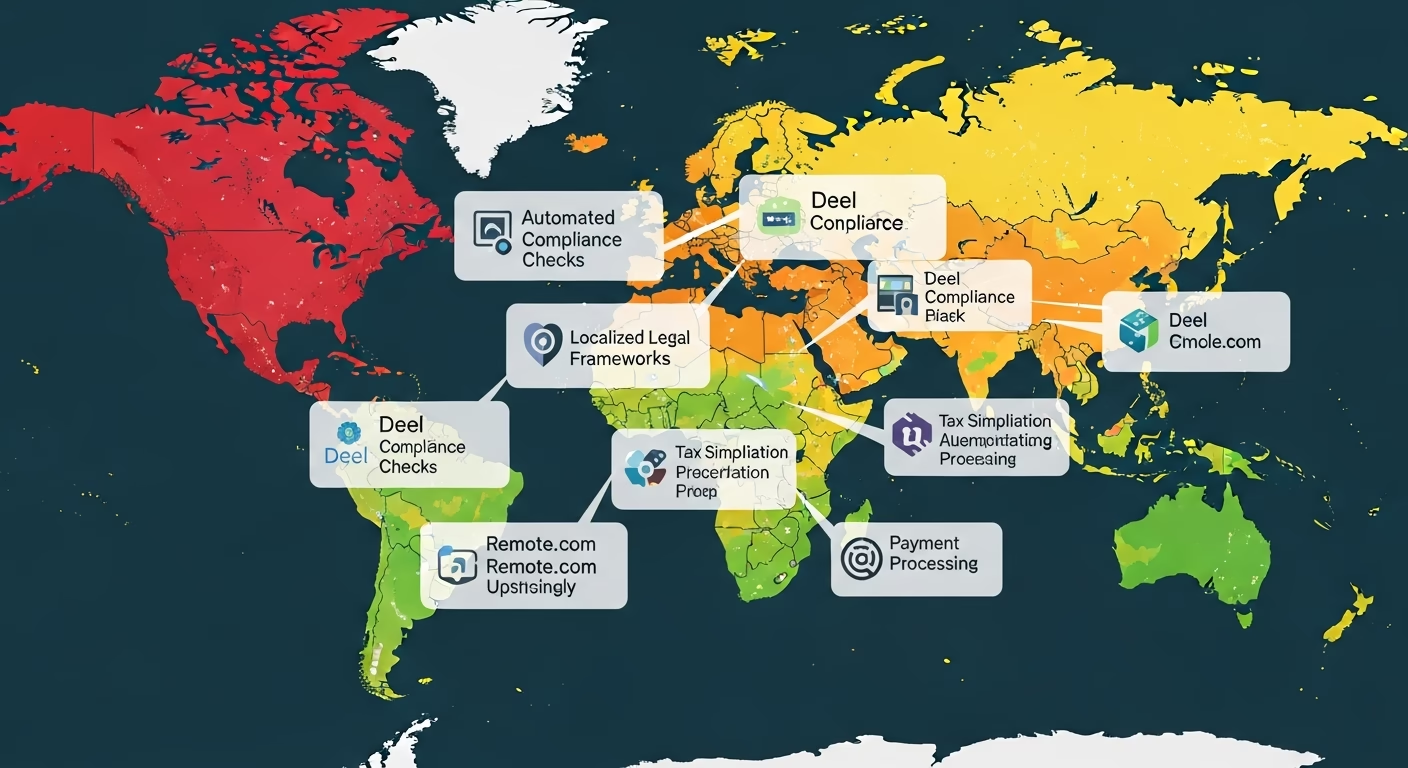
The Misclassification Trap: Why Your Choice Matters More Than Ever
The distinction between a contractor and an employee is not merely administrative; it is a fundamental legal classification with profound implications for both the hiring company and the individual. In the realm of global labor law, it is arguably the hottest and most perilous topic. If you hire a contractor through Deel or Remote and that person consistently works exclusively for your company, uses company-provided equipment (like a laptop), has a company email address, is tightly integrated into your operational structure, and adheres to strict reporting requirements, they are highly likely to be considered a “de facto employee” in many jurisdictions.
The criteria for determining employment status vary, but common factors include:
* Control: The extent to which the company dictates how, when, and where the work is performed.
* Integration: How integral the worker is to the company’s core business operations.
* Duration/Exclusivity: Long-term, exclusive engagement often points towards employment.
* Financial Dependence: If the individual’s income largely or solely comes from one client.
* Equipment: Who provides the tools and equipment for the job.
* Risk/Reward: Whether the individual has the opportunity for profit or loss.
Countries like California (with its stringent ABC test), the UK (IR35 regulations), and many EU member states have significantly tightened these definitions, imposing severe penalties for non-compliance. These can include back pay, unpaid benefits, social security contributions, tax arrears, fines, and even criminal charges in some instances. The financial exposure can be astronomical, potentially forcing companies into bankruptcy or crippling their growth.
How Deel handles this: Deel proactively addresses this risk through its “Compliance Hub,” an advanced feature that leverages AI and machine learning to flag high-risk contractors based on local labor laws and observed work patterns. For example, if a contractor in Spain is submitting invoices for 40 hours a week, every week, for an extended period, Deel will send an alert suggesting you review the relationship and potentially consider moving them to an EOR (full employee) model to mitigate risk and avoid fines. Their platform provides actionable insights and prompts to stay ahead of regulatory changes.
How Remote handles this: Remote.com provides robust consultative support, particularly valuable due to their owned entity model. Because they have in-house legal teams operating within their local entities, they can provide specific, granular advice on when it is time to transition a contractor to full EOR status to protect the company’s long-term interests. This direct access to local legal expertise allows for nuanced guidance tailored to specific country regulations, offering a more hands-on, expert-driven approach to navigating this complex legal minefield. Remote’s Global Independent Contractor Guide is a testament to their commitment to educating clients on these critical distinctions.
When to Choose Deel
Deel is the optimal choice for fast-growing tech companies, startups, and enterprises that need a “Swiss Army Knife” for global hiring. Its platform is designed for agility, broad reach, and a modern, contractor-centric experience.
- Choose Deel if: You need to hire quickly and expansively in many different, sometimes obscure countries where other platforms might not yet have a direct footprint. Its vast country coverage provides unparalleled flexibility.
- Choose Deel if: Your contractors are highly vocal about wanting modern payment options, such as cryptocurrency withdrawals, instant access to funds via a debit card (Deel Card), or a wide array of e-wallet options. Deel’s fintech innovations are a major draw for global talent.
- Choose Deel if: You desire a fully integrated HRIS that can handle everything from background checks and equipment provisioning to global mobility services and core HR functions, all within a single, unified, and highly automated dashboard.
- Choose Deel if: You are particularly risk-averse regarding misclassification and want the highest level of financial indemnification and liability assumption through a service like Deel Shield.
When to Choose Remote.com
Remote.com is the superior choice for companies that prioritize legal purity, a streamlined, focused experience, and deep infrastructural control. Its “owned entity” model appeals to businesses seeking long-term stability and meticulous compliance.
- Choose Remote if: You prefer a platform that owns its local legal and operational infrastructure rather than relying on third-party partners. This model ensures more direct control over the employee experience, greater consistency in service, and often deeper local legal expertise.
- Choose Remote if: You are highly concerned about intellectual property protection, especially in specific high-value jurisdictions like the UK, Germany, or France, and require an absolutely legally airtight chain of IP transfer (e.g., Remote IP Shield).
- Choose Remote if: You want a predictable, flat pricing model for contractor management that is often lower than the competition, making budgeting simpler and more transparent for straightforward engagements.
- Choose Remote if: Your focus is on providing robust, localized benefits packages to your global workforce, as Remote.com excels in curating and administering comprehensive benefits that comply with local regulations and expectations.
Final Verdict
Ultimately, there is no single “bad” choice between Deel and Remote.com. Both platforms have undeniably revolutionized the ability for a small startup in San Francisco or an established firm in London to hire the best talent in the world, unconstrained by geographic boundaries and without the immense overhead of opening local offices. Their existence empowers businesses to become truly global.
The decision hinges on a strategic alignment with your company’s specific operational needs, growth philosophy, and risk appetite. If you are a rapidly scaling startup that needs to move with exceptional speed, cover a vast array of countries, and wants to provide the most modern and flexible perks and payment options to your contractors, Deel is often the winning choice. Its aggressive expansion, fintech integration, and comprehensive HR suite cater to agile, growth-focused organizations.
Conversely, if you are an established firm or a company operating in an IP-sensitive industry that values deep legal infrastructure, guaranteed IP protection, the consistency of owned entities, and a minimalist yet professional interface, Remote.com is likely the superior partner. Its focus on foundational legal integrity and predictable costs appeals to businesses prioritizing stability and meticulous compliance.
Before making a definitive decision, companies should conduct a thorough internal audit of their specific global hiring needs:
1. In which 5-10 countries are we most likely to hire contractors, both immediately and in the next 12-24 months? (This impacts geographical coverage importance.)
2. What is our monthly budget per contractor for administrative and compliance services, and how sensitive are we to variable costs? (This impacts pricing model preference.)
3. How critical is intellectual property ownership to our business model, and what level of risk are we willing to accept in this area? (This is paramount for tech, R&D, and creative firms.)
4. What level of payment flexibility do our contractors expect, and how important is it for us to offer diverse withdrawal methods, including non-traditional ones?
5. What is our comfort level with misclassification risk, and what level of indemnification or preventative consultation do we require?
By thoughtfully answering these questions, the choice between Deel and Remote.com becomes not just a matter of comparing features, but a strategic decision that aligns seamlessly with the company’s global growth philosophy and long-term objectives. Both platforms are excellent, but the “best” one is the one that best fits your unique journey in the global talent marketplace.