

JazzHR vs. Breezy HR: Best Budget ATS for Startups?
JazzHR vs. Breezy HR: Best Budget ATS for Startups?
The modern startup environment is defined by rapid scaling and the constant pressure to secure top-tier talent before competitors do. In this high-stakes environment, the traditional method of managing resumes via spreadsheets and messy email threads is not only inefficient but a significant liability. The lack of a structured approach leads to lost candidates, inconsistent communication, potential legal blind spots, and ultimately, a slower growth trajectory. Enter the Applicant Tracking System (ATS)—a software category designed to centralize, automate, and optimize the entire recruitment lifecycle. For startups, the challenge isn’t just finding a powerful tool; it’s finding one that balances sophisticated automation with a budget-friendly price point, ensuring that cutting-edge technology doesn’t cripple the early-stage budget.
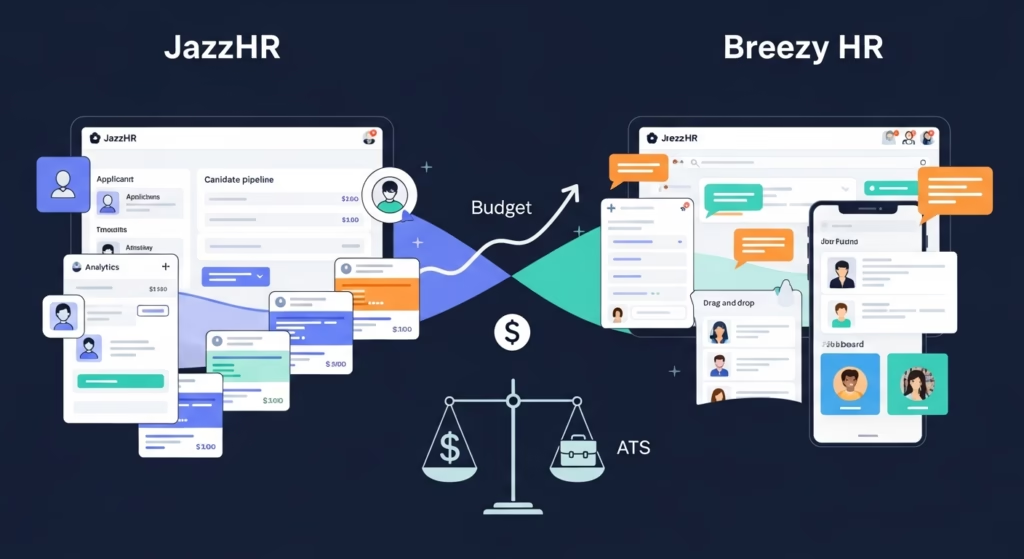
Two names consistently dominate the conversation for small-to-medium businesses (SMBs) and high-growth startups seeking cost-effective yet robust solutions: JazzHR and Breezy HR. Both platforms have carved out niches by offering many enterprise-grade features without the six-figure price tags associated with legacy systems like Workday or Oracle Taleo. While some companies might look toward Greenhouse vs. Lever for high-end enterprise needs, JazzHR and Breezy HR understand that startups need agility and power, not just complexity. However, despite their shared target market and commitment to affordability, their philosophies on pricing, user interface, core feature sets, and even the underlying approach to hiring differ significantly.
The Startup Hiring Landscape and Recruitment Automation
Before diving into the specifics of each platform, it is essential to understand why startups require specific features that go beyond basic resume storage. High-growth companies typically experience “hiring bursts”—periods where they might need to fill 10, 20, or even 50 roles in a single month, followed by periods of relative quiet as new hires integrate. This erratic demand means a lean HR team or even a founder often juggles multiple roles, making manual recruitment a logistical nightmare.
Recruitment automation is the engine that allows a lean team to manage these bursts efficiently. In the modern era, AI & Data: Redefining Talent Acquisition & Recruitment has changed the expectations for what a budget ATS can do. Automation in this context extends far beyond simple job posting:
- Automated Job Posting & Syndication: This is a fundamental time-saver. Instead of manually posting to dozens of job boards, an ATS allows for distributing a single job description to hundreds of boards (Indeed, LinkedIn, Glassdoor, industry-specific sites) with one click.
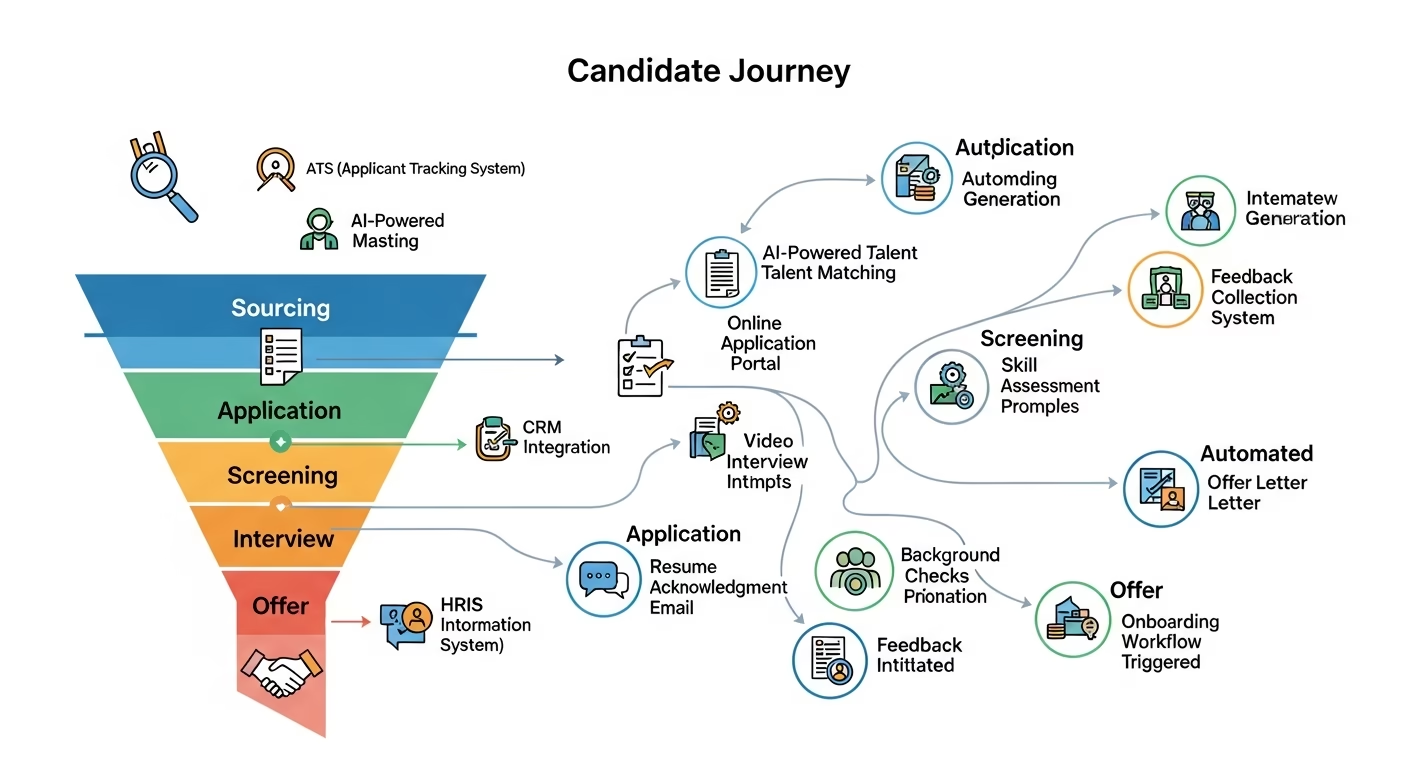
- Resume Parsing & AI Screening: Modern ATS platforms leverage artificial intelligence to extract critical data from resumes (skills, experience, education), making candidate profiles searchable and comparable.
- Workflow Triggers & Communication Automation: An ATS can be configured to automatically move a candidate to the next stage, send personalized rejection emails, or schedule interviews based on team availability.
- Candidate Sourcing & Relationship Management: These platforms include functionalities that border on CRM, allowing startups to nurture passive candidates and build talent pools.
Both JazzHR and Breezy HR excel in providing these core automation features, but they approach the user’s workflow and overall recruitment process with different mental models.
Pricing and Feature-to-Value Analysis
Pricing is often the deciding factor for a startup. Both platforms utilize a Software as a Service (SaaS) model, but their tier structures cater to different scales of growth.
JazzHR Pricing Structure
JazzHR uses a “per-feature” rather than a strict “per-user” model, which is advantageous for startups with many hiring managers.
- Hero ($75/mo): Aimed at very small teams. This tier is explicitly limited to three open jobs at a time. It is a good entry point to formalize recruitment but lacks the scale for rapid growth.
- Plus ($269/mo): The “sweet spot” for most growing startups. It adds the critical “Syndicate” feature and allows for unlimited users.
- Pro ($449/mo): Aimed at companies needing full automation, including electronic signatures and advanced compliance tools (EEOC/OFCCP reporting).
Breezy HR Pricing Structure
Breezy HR is famous for its “Bootstrap” tier and its “Unlimited” philosophy on higher tiers.
- Bootstrap (Free): Allows for one active position. Perfect for prototyping a hiring process.
- Startup ($189/mo): Designed for early-stage growth with unlimited users and candidates, though it still limits the number of active job postings.
- Business ($439/mo): The flagship tier offering unlimited everything: users, candidates, and positions. For a startup hiring for 20+ roles simultaneously, this tier provides unparalleled value.
- Pro (Custom): Adds candidate enrichment and enhanced data retention policies.
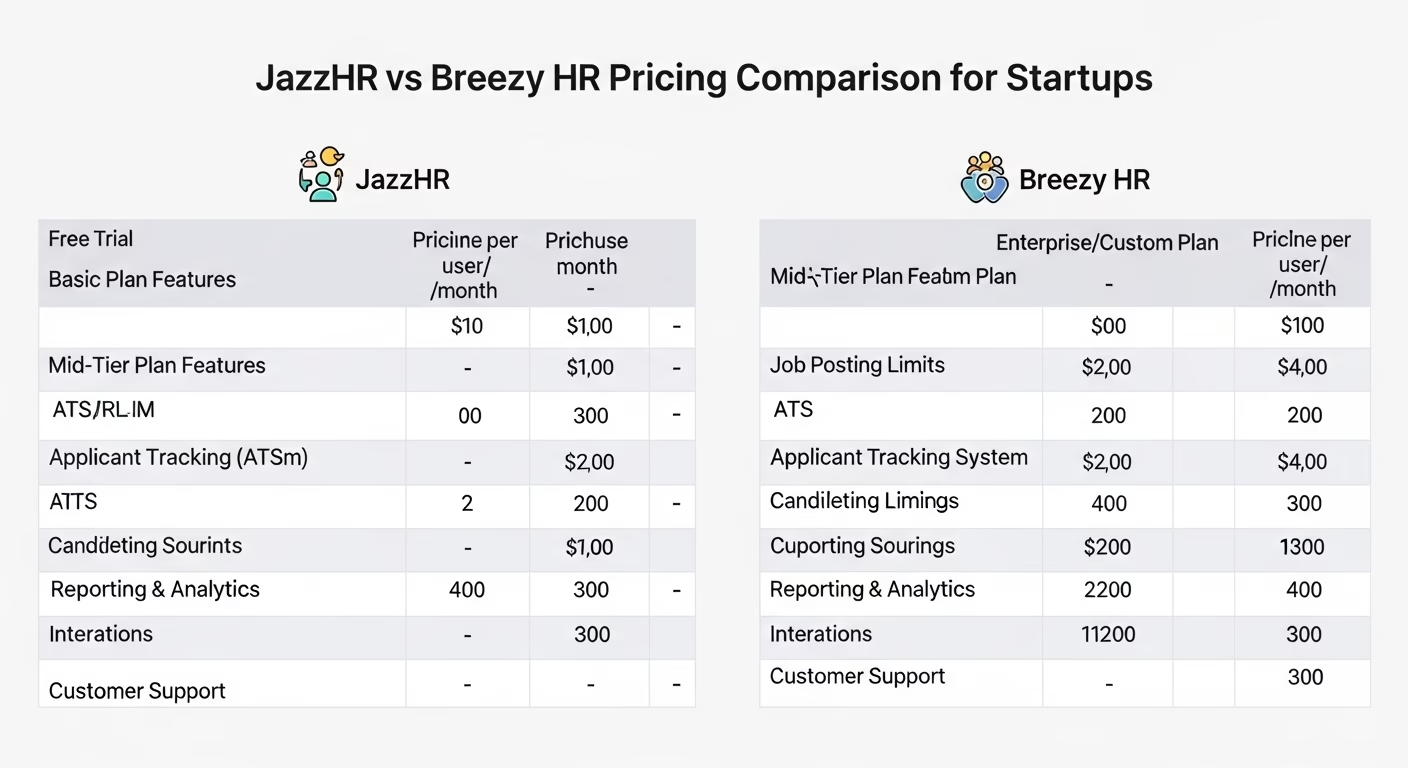
The Verdict on Value: If your startup plans to hire for 10+ roles simultaneously, Breezy HR’s “Business” plan offers superior value because it doesn’t throttle active jobs. However, if your startup has a slower, deliberate hiring pace, JazzHR’s lower tiers provide a more professional toolset at a competitive entry cost. For current specifics, always refer to the JazzHR Official Pricing and Feature Guide and the Breezy HR Features and Pricing Overview.
Collaborative Hiring Workflows and Team Permissions
Startups thrive on collaboration. An effective ATS must make it easy for engineers, marketers, and founders to jump in and provide feedback.
Breezy HR: The Visual Approach
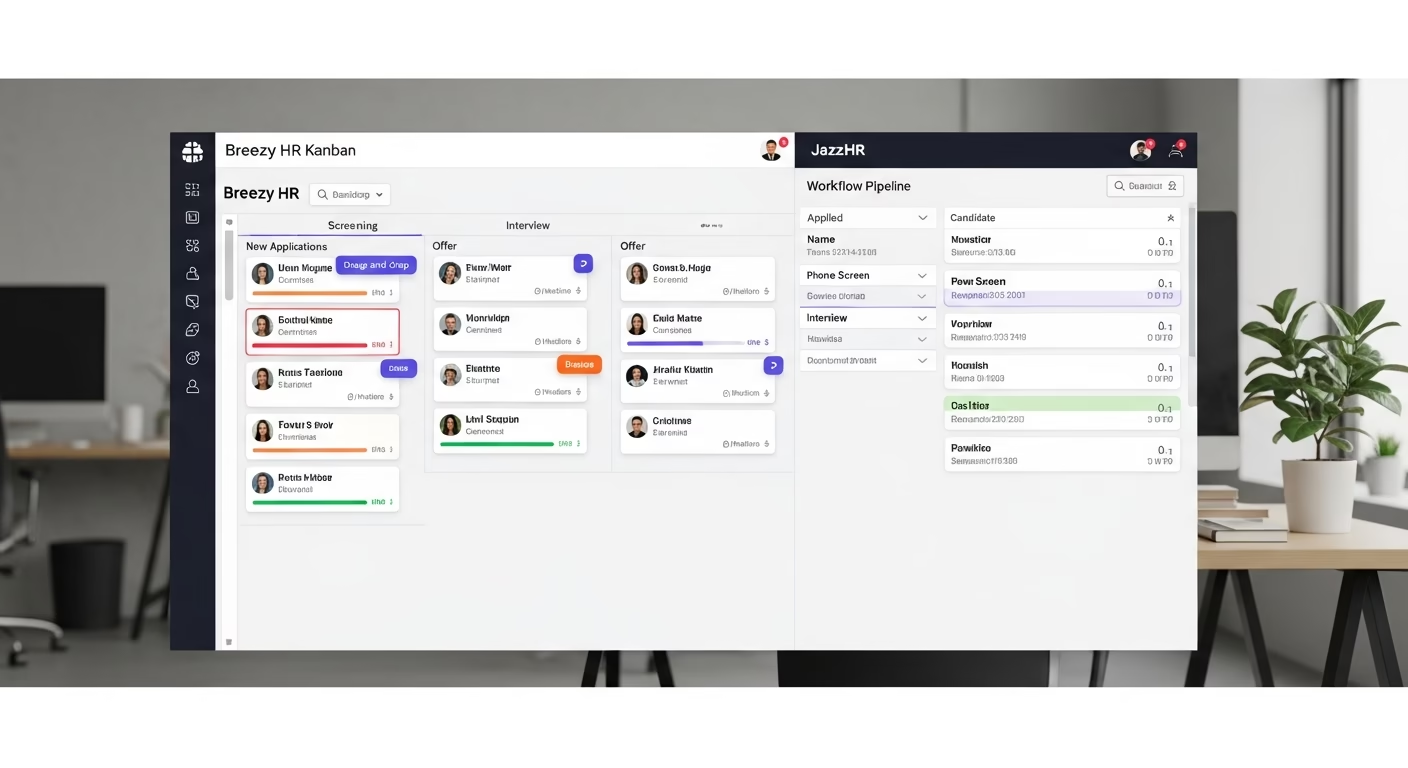
Breezy HR utilizes a Kanban-style board (similar to Trello), providing a clear, drag-and-drop interface. Candidate cards are easily moved through stages, giving a transparent view of the pipeline. It includes a built-in Slack-like chat for each candidate profile, allowing teams to discuss feedback without leaving the platform.
JazzHR: The Process-Driven Approach
JazzHR focuses on “defined stages” and structured processes. Its core strength lies in its ability to enforce custom workflows and standardized evaluation. It allows for the creation of standardized interview questions and custom scorecards that team members fill out directly, ensuring every candidate is graded on objective criteria.
Integrations: LinkedIn and HRIS Ecosystems
An ATS must integrate with the tools you already use. Both platforms are “LinkedIn Preferred Partners,” enabling features like LinkedIn Easy Apply and InMail sync.
HRIS and Onboarding
A seamless transition from ATS to HRIS is vital to reduce manual data entry.
* JazzHR: Offers deeper integrations with platforms like Gusto, BambooHR, and ADP. Once a candidate is hired, data is pushed automatically, which is a critical part of knowing how to automate onboarding.
* Breezy HR: While it integrates with major HRIS platforms, users sometimes find the data mapping slightly more rigid than JazzHR’s flexible export tools.
Candidate Experience and Mobile-First Interfaces
In a competitive market, the candidate experience reflects your brand.
* Breezy HR: Built with a modern, mobile-responsive frontend. Their application forms optimize dynamically for any screen size, supporting “one-click” applications via mobile devices.
* JazzHR: Offers a “text-to-apply” feature, which is highly effective for startups hiring for field roles or positions where candidates might not have immediate desktop access.
Data and Analytics for High-Growth Scaling
JazzHR Reporting: Compliance and Source Quality
JazzHR is known for its compliance-heavy reporting. It tracks demographic data and applicant flow, helping startups monitor diversity initiatives. It provides detailed reports on source quality, identifying which job boards yield the highest ROI.
Breezy HR Reporting: Pipeline Health
Breezy HR focuses on identifying bottlenecks. Its visual charts show how long candidates sit in each stage. If candidates are stuck in the “Technical Interview” stage for 10 days, the system flags the delay, allowing the team to address the chokepoint.
The Final Verdict: Which is Best for Your Startup?
Both JazzHR and Breezy HR represent the gold standard for budget-conscious recruitment.
Choose Breezy HR if:
- You have high volume and frequent hiring bursts (Business Plan value).
- You prioritize “Ease of Use” and a visual Kanban interface.
- You want built-in native Video Interviewing tools.
Choose JazzHR if:
- You need custom, complex workflows tailored to different departments.
- You focus on structured interviews and standardized scorecards to mitigate bias.
- You need deep, seamless HRIS integration for a professional “Hire-to-Pay” transition.
- Compliance and detailed reporting are critical for your growth trajectory.
Moving away from spreadsheets to a dedicated ATS is the most important step in professionalizing your startup’s growth. Whether you choose the visual agility of Breezy HR or the process-driven structure of JazzHR, you are investing in a scalable future.