

Talent Acquisition Evolution: From Keywords to Cognitive AI
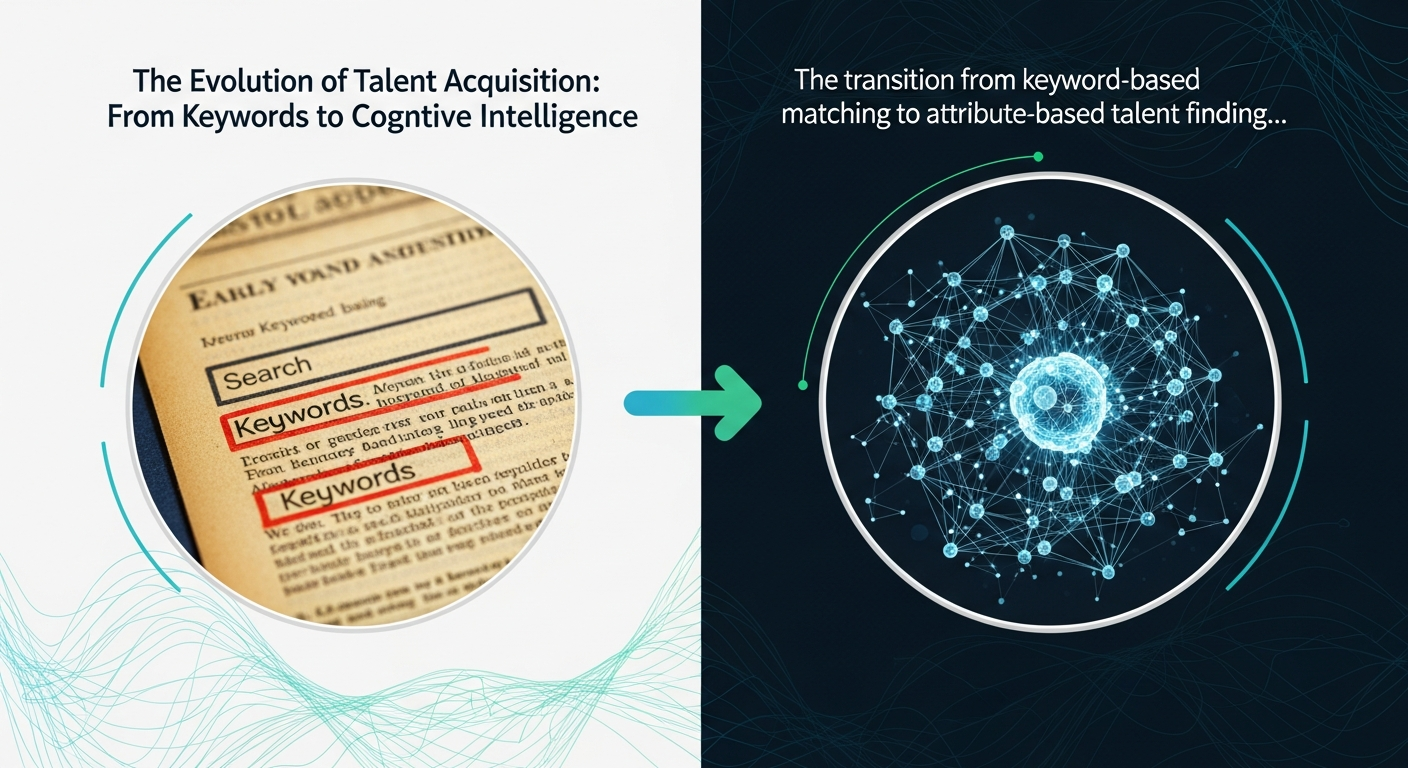
The Evolution of Talent Acquisition: From Keywords to Cognitive Intelligence
The transition from keyword-based matching to attribute-based talent filtering represents a fundamental paradigm shift in recruitment technology. This industry-wide move from legacy ATS to AI-driven talent intelligence: the great migration addresses the flaws of traditional methods. For decades, keyword matching relied on exact text overlap—a process that frequently misses highly qualified candidates who use non-standard terminology. Research indicates that traditional Applicant Tracking Systems (ATS) filtering can overlook up to 75% of qualified resumes due to these rigid constraints.
In contrast, modern recruitment strategies utilize Natural Language Processing (NLP) and Large Language Models (LLMs) to understand semantic meaning, skill adjacencies, and career trajectories. These AI-driven models map “skills clusters,” recognizing that a candidate with “data visualization” expertise likely possesses proficiency in tools like Tableau or PowerBI even if they aren’t explicitly listed. According to the latest trends in recruiting technology, the industry is moving rapidly toward these dynamic, data-driven insights to solve the talent gap.
Streamlining the Top-of-Funnel Bottleneck
Automated candidate engagement and personalized outreach tools have begun to address the historical “top-of-funnel” bottleneck. By scanning a candidate’s public digital footprint—including GitHub repositories, technical blogs, and professional portfolios—AI systems can generate hyper-personalized outreach messages. Statistics show that this level of personalization can increase candidate response rates by 20% to 30% compared to generic templates.
Beyond simple outreach, “people intelligence” platforms now provide predictive analytics regarding a candidate’s “propensity to move.” By analyzing tenure patterns and company stability, recruiters can prioritize individuals who are statistically more likely to be open to new opportunities, significantly increasing the efficiency of sourcing efforts.
Verifying Technical Proficiency Beyond the Resume
Technical talent deep search tools have expanded the sourcing landscape far beyond the traditional confines of LinkedIn. These platforms aggregate data from open-source contributions on GitHub, technical Q&A on Stack Overflow, and even patent databases to verify proficiency through objective output rather than self-reported claims. This is particularly critical in specialized fields where demand far exceeds supply.
Industry reports suggest that nearly 68% of recruiting professionals believe AI-powered sourcing is the most effective way to improve the quality of hires while reducing the time-to-fill by an average of 25% to 50%. This evolution is further explored in strategic talent acquisition technology analysis, which highlights how organizations are navigating the journey from manual processes to automated intelligence.
The Impact on Efficiency and Diversity
The shift toward AI integration is not just a trend but a necessity for modern HR departments. Currently, 63% of talent acquisition leaders are investing in AI to automate the sourcing process. The results are tangible: AI-driven automation can save recruiters approximately 14 hours per week by handling manual sourcing and initial outreach tasks. This transformation is a core part of AI in recruitment: the future of hiring trends for 2025.
Furthermore, the technology is playing a vital role in corporate social responsibility. Over 80% of organizations using AI for recruitment report that it has helped them find more diverse candidates. By focusing on objective attributes and skills rather than human-perceived patterns, AI reduces human bias in the initial screening phase, creating a more equitable and effective hiring landscape for the future.


One Response
[…] journey, from the initial point of discovery to long-term alumni engagement. As we witness the Talent Acquisition Evolution: From Keywords to Cognitive AI, organizations are realizing that hiring is no longer a series of isolated events but a continuous […]