

How AI and Robotics are Redefining the Global Economy
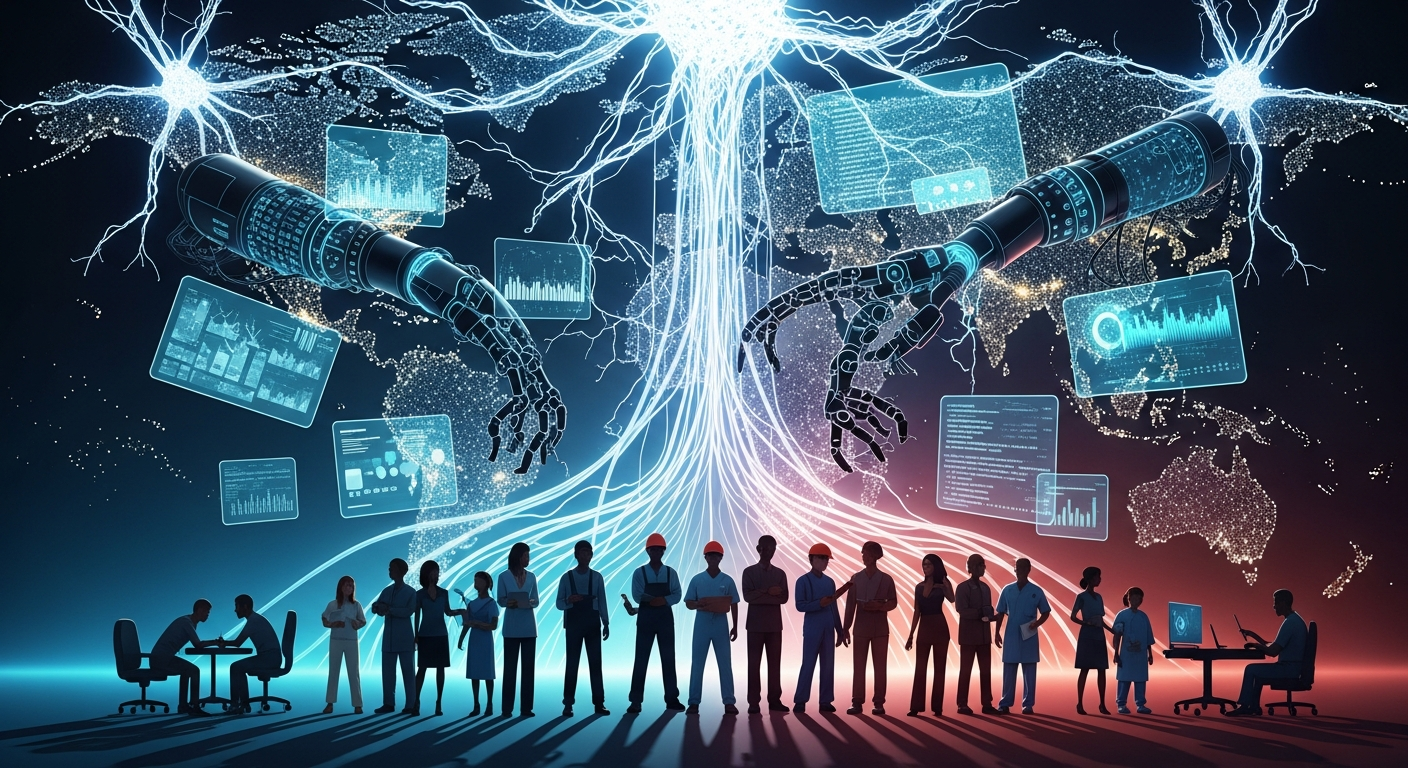
How Generative AI and Robotics are Redefining the Global Economy
The global labor market is undergoing a seismic shift as Generative AI matures from a niche tool into a foundational economic pillar. This transition is not uniform; instead, it is creating a landscape of divergent outcomes across different demographics and regions. Data from the Future of Jobs Report 2023 by the World Economic Forum indicates that workers with basic education and women are facing disproportionately higher risks as automation intensifies. This divergence highlights an urgent need for inclusive policy-making and targeted reskilling to ensure that the benefits of AI are distributed equitably across the global economy.
The Impact on Specialized Sectors and Employment
The impact is particularly acute in specialized sectors such as finance and professional services. In the European banking sector, for instance, a high proportion of roles are now classified as highly exposed to AI-driven automation. A recent report on the impact of AI on banking employment in Europe suggests that this exposure necessitates a fundamental strategic shift in workforce management.
Rather than viewing AI as a simple replacement for human talent, forward-thinking institutions are prioritizing the acquisition of new skills that complement automated systems. This evolution is central to modern recruitment: AI automation & human capital trends, where turning potential displacement into a driver of operational efficiency becomes the primary goal for HR leaders.
Big Data and National Digital Strategies
Beyond the labor market, national digital strategies are pivoting toward the deep integration of Big Data. Global market revenues for Big Data software and services are projected to grow significantly as businesses move beyond simple task automation toward data-centric intelligent operations.
National foresight reports, such as Thailand’s 2035 digital strategy, emphasize that AI and Big Data are the primary engines of future economic resilience. This shift requires organizations to move away from traditional, siloed business models and embrace a framework where data informs every strategic decision, ensuring they remain competitive in an increasingly automated world.
The Physical Manifestation: Advanced Robotics
This intelligence is also manifesting physically through the blending of robotics with intelligent software. Industrial organizations are no longer limiting robotics to the manufacturing floor; instead, they are becoming central components of high-stakes technological infrastructure. Major aerospace and defense entities, such as Airbus, are prioritizing the development of complex automated systems—including the Future Combat Air System—to maintain competitive advantages.
These advancements demonstrate that the integration of robotics is as much about strategic brand positioning and national security as it is about production speed. As supply chains evolve, the focus is shifting toward global fulfillment: the future of sustainability and tech, where automation ensures both speed and environmental responsibility.
Building a Resilient, Human-Centric Future
As AI and robotics continue to automate routine tasks, the strategic value of human-centric brand management and sustainable business practices is increasing. Technology-driven growth is increasingly focused on narrowing the digital divide and managing the social transitions associated with a highly automated workforce. For modern organizations, the challenge is to leverage these powerful technologies not just for short-term efficiency, but to build a resilient, sustainable future that balances automated precision with human insight.