

McDonald’s Archways to Opportunity: Career Growth & AI Hiring
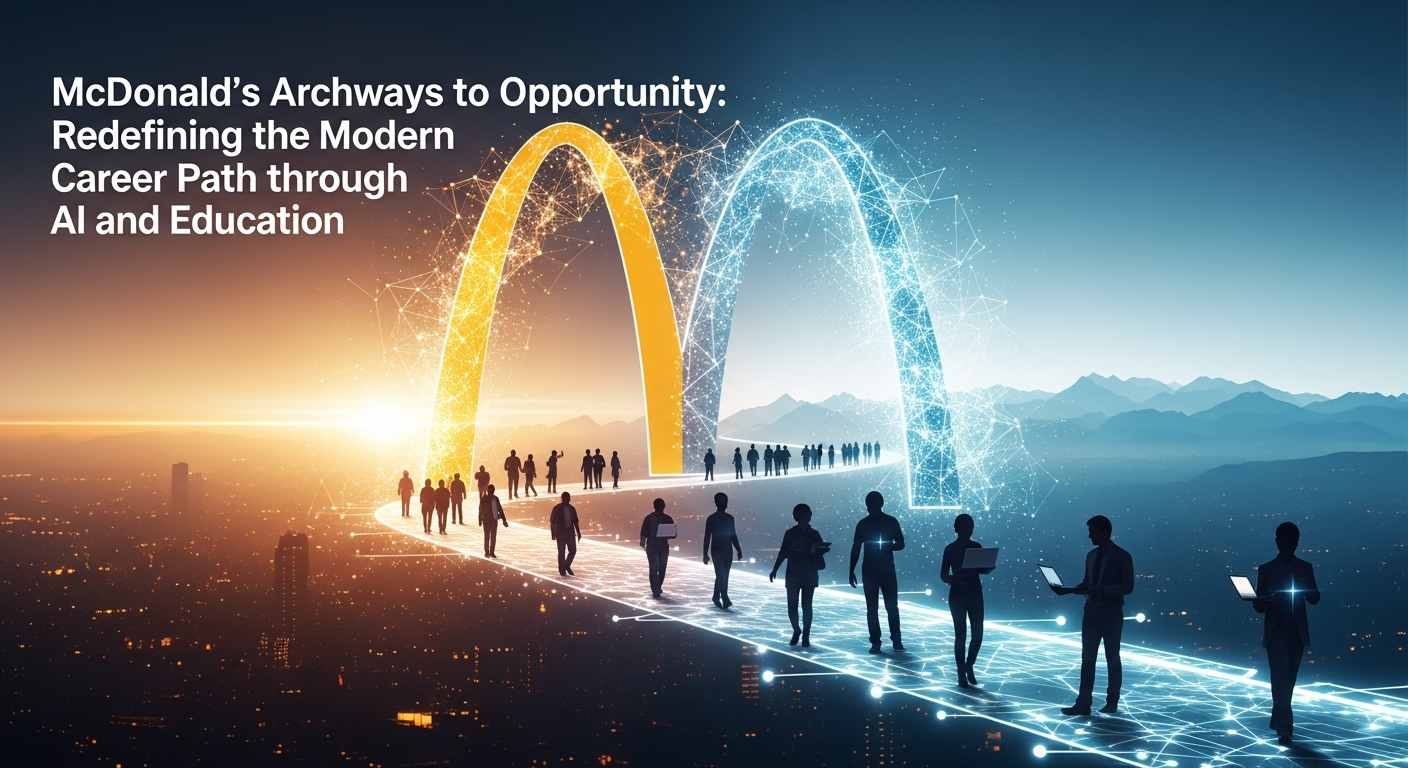
McDonald’s Archways to Opportunity: Redefining the Modern Career Path through AI and Education
The landscape of the contemporary American labor market is undergoing a seismic shift, moving away from the rigid structures of the past toward a more dynamic, employee-centric model. For decades, the Quick Service Restaurant (QSR) sector was defined by high turnover, entry-level wages, and a persistent perception of “stop-gap” employment—often disparagingly referred to as a “McJob.” However, as the competition for talent intensifies in a post-pandemic economy, the world’s largest restaurant chain is leading a revolution that moves far beyond basic hourly compensation. McDonald’s has effectively transitioned its value proposition from a simple paycheck to a comprehensive platform for social mobility, academic advancement, and digital-first workplace flexibility. This evolution is best exemplified by the McDonald’s Archways to Opportunity program, a strategic initiative that has fundamentally democratized access to higher education for the service-class workforce.
Since its launch in 2015, Archways to Opportunity has functioned as much more than a corporate social responsibility project; it is a core pillar of the company’s recruitment and retention strategy. In an era where traditional education costs are skyrocketing, McDonald’s has stepped in to fill the gap, positioning itself as a primary facilitator of the American Dream. By allocating over $185 million in tuition assistance and supporting more than 80,000 employees in the United States alone, the brand is proving that the service industry can be a legitimate springboard for long-term professional success. The program is built upon four primary pillars designed to meet employees at their specific point of need: English Under the Arches, High School Completion, College Tuition Assistance, and Education/Career Advising.
The Four Pillars of Academic Advancement
“English Under the Arches” is perhaps one of the most culturally significant components of the program. It is a specialized ESL (English as a Second Language) curriculum designed specifically for the QSR environment. Unlike generic language courses, this initiative teaches the precise vocabulary and communication nuances required for restaurant management and customer service excellence. For many employees, language barriers represent the single greatest hurdle to promotion. By removing this obstacle, McDonald’s not only improves its internal talent pipeline but also provides workers with life skills that translate to better integration within their broader communities. Statistical data from the Archways to Opportunity Official Site reveals that graduates of this program experience measurable increases in both job performance and long-term retention, proving that investing in communication is a win-win for both the individual and the enterprise.
For the millions of Americans who left the secondary education system without a diploma, the path back to academia can be daunting and expensive. McDonald’s addresses this through a partnership with Career Online High School, offering a fully accredited high school diploma at no cost to the employee. This distinguishes itself from the GED, which is a test-based equivalency. The diploma program allows workers to gain specialized career certificates in fields such as retail management or office administration while they finish their high school requirements. This initiative targets the “skills gap” head-on, ensuring that entry-level workers have the foundational credentials necessary to advance either within the company or in the wider job market.
![A diverse group of McDonald’s employees in graduation regalia standing in front of a modern restaurant, symbolizing the success of the Archways to Opportunity program and the bridge between fast-food service and academic achievement.]
The most aggressive recruitment tool in this arsenal remains the tuition assistance program. Eligible crew members are entitled to up to $2,500 per year, while managers can access up to $5,250. Crucially, this financial support is not restricted to degrees relevant to the food industry. An employee can use McDonald’s funding to pursue a degree in nursing, computer science, or fine arts. This “exit-strategy” benefit is a masterclass in modern corporate psychology. By funding a worker’s transition into their next career phase—even if that phase is outside of the Golden Arches—the company fosters a deep sense of loyalty and engagement. Employees who feel their long-term goals are supported are statistically more likely to remain productive and dedicated during their tenure, reducing the massive costs associated with high turnover in the hospitality sector.
To ensure that these educational investments lead to professional growth, McDonald’s has worked to ensure that its internal training is recognized by the broader academic world. This is achieved through a rigorous McDonald’s training evaluation by the American Council on Education (ACE). By aligning management training with college credit standards, McDonald’s transforms operational experience into academic capital, allowing managers to fast-track their degrees while they work. This recognition validates the complexity of modern restaurant management, which involves supply chain oversight, personnel management, and P&L responsibility.
The AI-Driven Recruitment Revolution: McHire and Olivia
While educational benefits provide the long-term “pull,” the recruitment process itself has been redesigned to meet the technological expectations of Gen Z and Gen Alpha. The traditional frictions of job hunting—filling out 30-minute forms, uploading resumes into incompatible databases, and waiting weeks for a callback—are non-starters for today’s mobile-first candidates. To solve this, McDonald’s introduced “McHire,” an AI-powered recruitment ecosystem that mirrors the Modern Recruitment: AI Automation & Human Capital Trends seen across the tech sector.
The face of this digital transformation is “Olivia,” an AI assistant developed in collaboration with Paradox. Olivia facilitates the entire application process via SMS or web chat, creating a frictionless experience that matches the pace of modern life. Olivia handles initial screening, answers common questions about benefits and pay, and—most importantly—schedules interviews in real-time. This has reduced the industry-standard “time-to-hire” from nearly two weeks to under 24 hours in many locations. In a hyper-competitive market, the brand that reaches the candidate first usually wins. By leveraging Paradox’s AI solutions, McDonald’s has successfully lowered the barrier to entry, making applying for a job as easy as sending a text message.
Once hired, the digital experience continues through onboarding and training. The company has moved away from thick paper manuals in favor of gamified learning modules and virtual reality (VR) simulations. These tools allow new hires to practice high-pressure tasks—like managing the intense lunch rush at the drive-thru—in a risk-free digital environment. This reduces the anxiety of the “first day” and ensures that service standards remain consistent across thousands of global franchises. By automating the administrative “top-of-funnel” tasks, restaurant managers are freed up to focus on the human side of leadership: mentoring their teams, identifying high-potential talent, and fostering a positive workplace culture.
Flexibility and the “Gigification” of the Service Sector
One of the greatest challenges facing the traditional 9-to-5 or fixed-shift model is the rise of the gig economy. Platforms like Uber and DoorDash have taught workers to value autonomy over their schedules above almost all else. In response, McDonald’s has pioneered a concept known as “Shift Sovereignty.” Through sophisticated mobile scheduling apps, employees are no longer passive recipients of a weekly rota; they are active managers of their own time.
These platforms allow crew members to view their schedules on their phones, swap shifts with qualified colleagues, and even pick up extra hours at different locations within the same franchise organization. This level of “radical flexibility” is essential for modern work-life integration. For a college student, it means the ability to drop shifts during finals week without fear of losing their job. For a parent, it means swapping an early morning shift for a late evening one to accommodate a child’s school schedule. This modular approach to labor allows McDonald’s to offer the stability and protections of a W-2 position—including healthcare and 401(k) options—with the flexibility typically associated with 1099 gig work.
The result of this autonomy is a marked decrease in “no-calls, no-shows.” When employees have agency over their time, they feel a greater sense of responsibility toward the shifts they choose to work. This evolution transforms the perception of service work into a flexible component of a multifaceted lifestyle, rather than a rigid burden that conflicts with personal growth.
![A high-tech smartphone interface displaying a McDonald’s internal scheduling app, showing a user easily sliding a toggle to swap a shift or select available hours at a nearby location, emphasizing modern workplace flexibility.]
Internal Mobility and the Leadership Laboratory
A central tenet of the McDonald’s brand narrative is the “Crew to Corporate” pipeline. This is not merely marketing fluff; it is supported by the existence of Hamburger University. Founded in 1961, this global training center operates seven campuses worldwide—including a state-of-the-art facility in Chicago—and provides management training that is academically rigorous enough to earn college credits. Hamburger University teaches more than just operational efficiency; it focuses on business strategy, emotional intelligence, and crisis management.
Approximately 40% of the corporate staff at McDonald’s, along with a significant portion of franchise owners, began their journey as frontline crew members. This internal mobility serves as a powerful retention tool. When a teenager starts their first job at the fry station, they aren’t just looking at a summer gig; they are entering a “leadership laboratory.” The brand markets its roles as opportunities to gain transferable skills—such as teamwork, time management, and resilience—that are highly valued in any boardroom. By demonstrating a clear, visible path from the front counter to executive leadership, McDonald’s attracts high-potential individuals who may lack formal credentials but possess the operational grit required for high-level management.
Total Rewards: Financial Wellness and the Whole Employee
In the modern QSR space, the definition of “Total Rewards” has expanded to encompass the “whole employee,” addressing the financial and emotional stressors that often lead to workplace burnout. One of the most impactful innovations in this area is Earned Wage Access (EWA). Through partnerships with platforms like DailyPay, McDonald’s allows employees to withdraw a portion of their earned wages immediately after their shift ends, rather than waiting for a bi-weekly paycheck.
In an economy where many workers live paycheck-to-paycheck, the traditional pay cycle can be a source of immense financial stress. EWA provides a critical safety net, allowing workers to cover unexpected expenses—like a car repair or an urgent utility bill—without resorting to predatory, high-interest payday loans. By utilizing DailyPay’s earned wage access, McDonald’s significantly improves the financial health of its workforce. Reduced financial stress leads to higher focus on the job, improved mental health, and lower turnover rates.
Beyond financial tools, the company has integrated mental health support through robust Employee Assistance Programs (EAPs). These programs offer free counseling sessions, stress management resources, and even emergency childcare assistance. By addressing the external factors that impact an employee’s ability to show up to work, McDonald’s demonstrates a holistic commitment to wellbeing that was once reserved for high-level white-collar executives. This shift recognizes that a supported employee is a more effective brand ambassador.
Diversity, Equity, and Inclusion as a Talent Magnet
McDonald’s has also taken a definitive stand on Diversity, Equity, and Inclusion (DEI), recognizing it as a strategic recruitment advantage in a diversifying world. At the corporate level, the company has taken the bold step of tying 15% of executive bonuses to the achievement of diversity targets. This includes increasing the representation of women and historically underrepresented groups in leadership roles globally.
This commitment to inclusion filters down to the restaurant level, where the focus is on creating a “belonging” culture. Targeted recruitment programs for veterans, senior citizens, and individuals with disabilities ensure that the workforce reflects the diverse communities the restaurants serve. For example, the “Hiring Our Heroes” partnership helps military members translate their tactical and leadership skills into management roles within the franchise system. This focus on DEI aligns the brand with the values of socially conscious Gen Z workers, who frequently cite “diversity and inclusion” as a top priority when choosing an employer.
![An infographic comparing traditional fast-food benefits with McDonald’s Total Rewards package, highlighting icons for mental health, instant pay, education, and career coaching, set against a backdrop of a clean, high-tech restaurant interior.]
The Future-Proof Workforce: Technology and Sustainability
As the world moves toward increased automation, many fear the replacement of human labor in the QSR industry. McDonald’s, however, is positioning technology as an augmentation rather than a replacement. The introduction of self-ordering kiosks, AI-driven drive-thrus, and automated beverage systems is designed to remove the “drudgery” of repetitive, low-value tasks. This allows crew members to pivot toward “hospitality-first” roles, focusing on guest experience, problem-solving, and personalization.
This transition requires a workforce with high technological literacy. Modern McDonald’s employees are trained to troubleshoot digital systems, manage complex kitchen display systems (KDS), and interpret data from AI forecasting tools. This training provides workers with “future-proof” skills that are highly valuable in an increasingly digital economy. This aligns with the Modern QSR Blueprint: Blending Technology & Hospitality, where the “augmented workforce” model emphasizes the uniquely human traits that cannot be automated: empathy, nuanced communication, and complex decision-making in real-time environments.
Furthermore, the brand’s commitment to achieving net-zero emissions by 2050 has introduced a “green-collar” dimension to restaurant roles. Employees are increasingly involved in circular economy initiatives, from waste sorting and energy-efficient kitchen management to the implementation of recycled packaging systems. This purpose-driven work appeals to the environmental consciousness of younger demographics, allowing them to feel that their daily labor contributes to global sustainability goals. Training in sustainability and resource management adds another layer of valuable experience to an employee’s resume, making their time at McDonald’s more than just a job in food service.
The Community-Centric Model and the Wage Floor
Despite its status as a global monolith, McDonald’s operates on a decentralized franchise model. This means that local owners are often deeply embedded in their neighborhoods, acting as local economic engines. Career opportunities are frequently framed through the lens of local impact. Participation in Ronald McDonald House Charities (RMHC) allows employees to engage in volunteer work and fundraising, fostering a sense of community leadership. This “local” narrative counters the image of a faceless corporation, positioning the local McDonald’s as a community hub that provides the first job for local teens and supports local schools and sports teams.
Ultimately, however, the baseline for recruitment remains competitive compensation. McDonald’s has led the industry in wage transparency and upward adjustments, with average starting wages in corporate-owned stores rising significantly above federal minimums. The “Wage Floor War” is a recognition that while tuition assistance and flexibility are vital, they must be built on a foundation of a living wage. By positioning its pay scales at the top of the QSR tier, McDonald’s ensures it can attract the volume of talent necessary to maintain its 24/7 global operations.
Conclusion: A New Social Contract
The transformation of the McDonald’s career path—from the Archways to Opportunity program to the integration of AI and financial wellness tools—represents a new social contract between employer and employee. It marks the end of the era where service work was viewed as disposable. By treating the frontline worker as a high-potential individual deserving of investment, McDonald’s is setting a new standard for the future of work.
The integration of advanced recruitment technology, radical scheduling flexibility, and path-breaking educational support creates a holistic environment where workers can thrive. Whether an employee stays for six months or thirty years, they leave with more than they brought: a degree, a certification, technical skills, or the financial stability to take their next step. In doing so, McDonald’s is not just selling burgers; it is building a bridge to the future for hundreds of thousands of workers worldwide, proving that even the most traditional industries can be at the forefront of human capital innovation.