

Modern Talent Acquisition: AI Filters & People Analytics
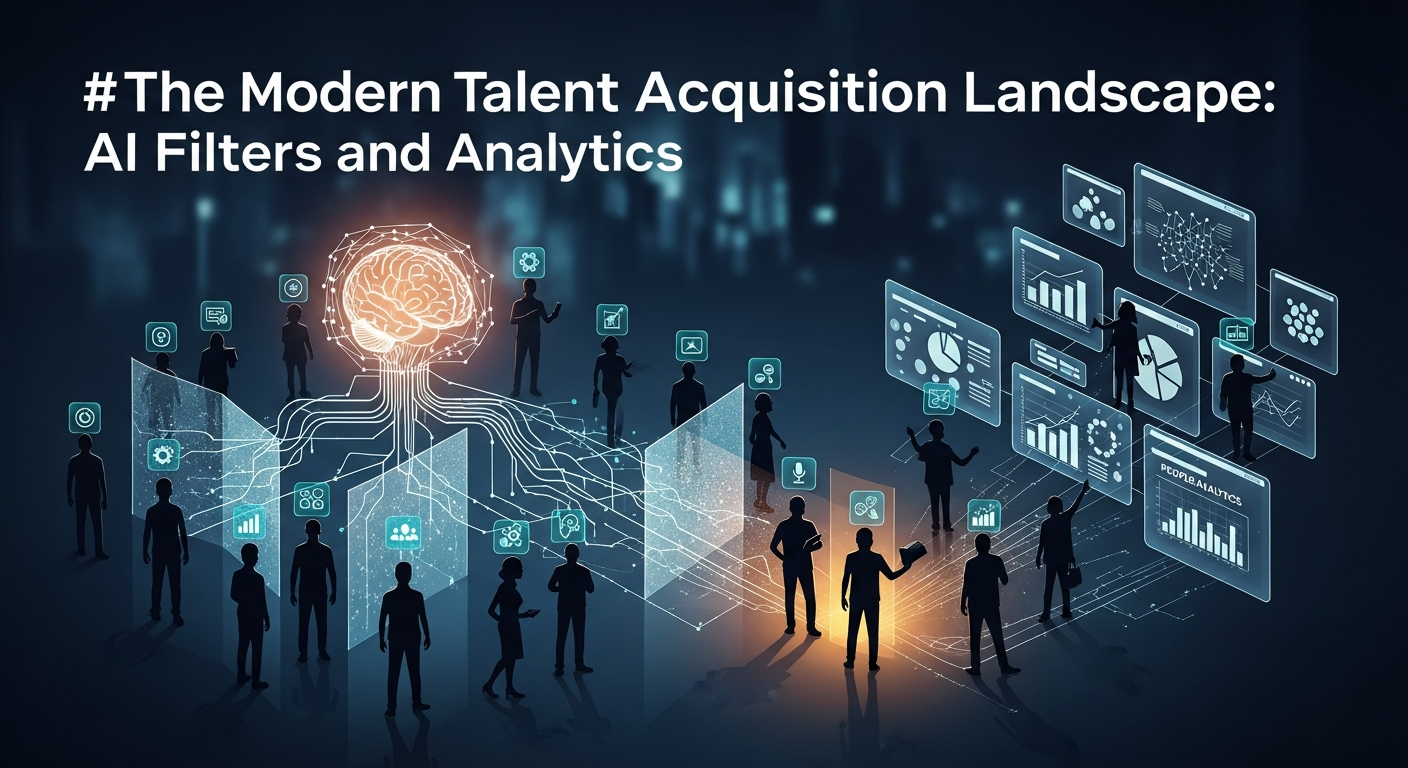
The Modern Talent Acquisition Landscape: AI Filters and People Analytics
In the contemporary job market, the path from application to offer letter is increasingly governed by a blend of sophisticated technology and data-centric evaluations. For candidates and HR professionals alike, understanding the mechanics of talent acquisition, AI filters, and the rise of people analytics is essential for navigating the professional world where traditional networking meets high-tech screening.
The Digital Gatekeeper: AI-Assisted ATS Optimization
Today, approximately 99% of Fortune 500 companies utilize Applicant Tracking Systems (ATS) to manage high volumes of candidates. These systems have evolved significantly; modern iterations leverage Natural Language Processing (NLP) to go beyond simple keyword matching, assessing the context and semantic relevance of a candidate’s experience. Despite this technological advancement, the barrier to entry remains steep, with research indicating that nearly 75% of resumes are discarded by an ATS before a human recruiter ever views them.
To maintain compliance and ensure visibility, candidates must prioritize keyword optimization that aligns with both “hard skills”—such as technical proficiencies in Python or Project Management—and “soft skills” like strategic thinking. Furthermore, candidates must avoid complex formatting. Elements such as tables, headers, footers, and non-standard fonts can cause parsing errors, leading to automatic disqualification regardless of a candidate’s qualifications.
Cracking the Code of Behavioral Interviews
Once a candidate clears the digital filters, the focus shifts to organizational culture and behavioral evaluation. While many tech giants have shifted their methodologies, understanding modern interview expectations is vital for any candidate aiming for the elite tier of the workforce.
Perhaps no hiring process is as rigorous or well-defined as Amazon’s, which is uniquely anchored in the Amazon Leadership Principles – Official Guide. These 16 principles serve as the primary criteria for evaluating both technical competence and “culture fit.” Success in these high-stakes interviews requires mastering the STAR method (Situation, Task, Action, Result) to provide data-backed evidence of achievements. Candidates are often evaluated by a “Bar Raiser” to ensure every new hire is better than at least 50% of the current employees in that role. Preparation involves mapping professional successes to core values such as “Customer Obsession,” as outlined in the official Amazon hiring framework, while focusing on individual contributions.
The Rise of People Analytics and Data-Driven HR
The shift toward data is not limited to candidate evaluation; it is transforming the internal operations of HR departments globally. The adoption of “People Analytics” allows organizations to use predictive modeling to identify attrition risks and pinpoint high-potential employees.
By tracking key metrics such as Quality of Hire (QoH), Employee Lifetime Value (ELV), and Diversity, Equity, and Inclusion (DEI) representation, companies are realizing significant gains. Organizations utilizing advanced people analytics report a staggering 80% increase in recruiting efficiency and a 25% rise in overall business productivity.
Building the Pipeline: Skills-Based Internships and LDPs
Finally, the “top of the funnel” for talent acquisition is being reshaped by structured career programs. Leadership Development Programs (LDPs) and internships have become the primary pipelines for entry-level talent, with conversion rates from intern to full-time hire often exceeding 50% at major firms.
There is also a notable shift toward “skills-based hiring,” where firms prioritize demonstrated ability over traditional prestige markers. For industry leaders, the success of these programs is now measured by long-term retention, and many firms are finding that a candidate’s AI literacy is becoming a more accurate predictor of career longevity than a degree from an elite institution. This ensures that the talent pipeline contributes to sustainable corporate growth in an era of rapid technological change.