

AI Predictive Intelligence in Education and Marketing
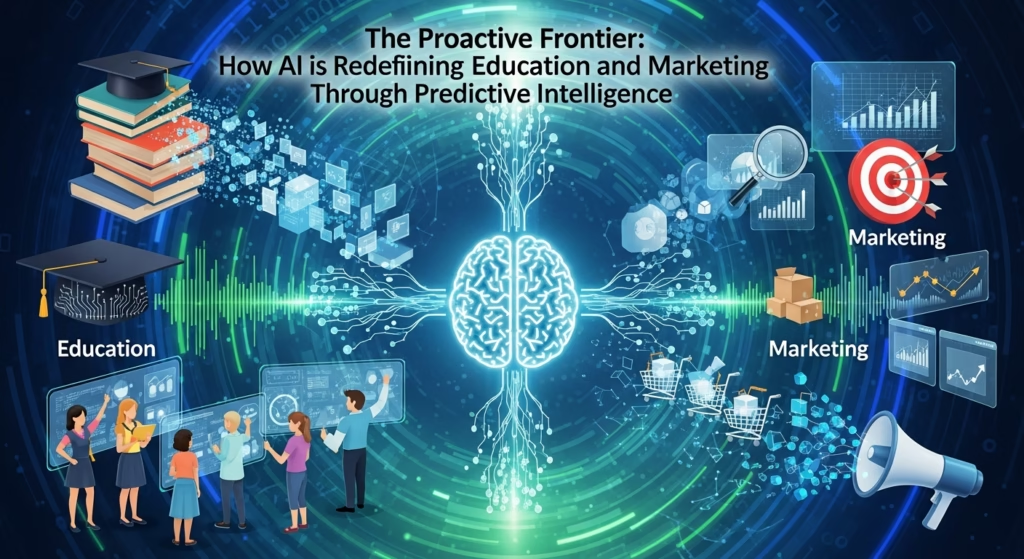
The Proactive Frontier: How AI is Redefining Education and Marketing Through Predictive Intelligence
The landscape of automated intelligence is undergoing a fundamental shift from reactive processing to proactive, hyper-personalized insight generation. This evolution is most visible in the education and marketing sectors, where the integration of Artificial Intelligence (AI), Big Data, and immersive technologies is dismantling traditional models. As the AI revolution reshapes economic impact and the future of work, organizations are pivoting toward real-time, data-driven adaptation to maintain a competitive advantage in a rapidly shifting digital economy.
The Rise of Adaptive Pedagogy
In the educational sector, AI-driven personalization is moving beyond simple administrative automation. Educators are now deploying sophisticated tools that analyze individual student performance data in real-time to generate custom learning paths. This integration represents a significant pedagogical evolution, allowing for a level of individualized instruction that was previously impossible to scale.
By automating the creation of adaptive teaching materials, institutions can address specific knowledge gaps as they emerge, effectively enhancing the classroom experience for diverse learner profiles. This shift is part of a broader movement toward digital learning trends and opportunities that prioritize student engagement and outcome-based metrics over rigid curriculum delivery.
Immersive Marketing and the Precision Journey
The marketing industry is witnessing a similar transformation through the synergy of AI, Virtual Reality (VR), and Big Data. The traditional customer journey is being replaced by a dynamic, immersive experience where brand interactions are shaped by predictive analytics. Modern businesses are leveraging AI-powered marketing strategies to achieve unparalleled efficiency in strategic campaign decisions.
Key developments in this space include:
- Predictive Viral Mapping: Companies are utilizing big data to identify “influencer nodes”—specific points within social ecosystems that hold the highest potential for viral spread.
- Dynamic VR Environments: By integrating consumer preference data into virtual spaces, brands can create immersive environments that respond and change based on the user’s past behaviors.
- Data-Driven Personalization: AI technologies are now the primary architects of the digital customer journey, significantly improving how consumers perceive and respond to brand messaging.
Prompt UX Optimization and AI Agency
As generative AI matures, the focus has shifted from basic interaction to “Prompt UX Optimization.” This movement aims to minimize the friction between human intent and machine output. The emergence of professional-grade “prompt packs” and autonomous AI agents marks a transition toward reliability and sophisticated utility.
The next generation of AI systems will likely function as autonomous agents capable of performing complex tasks on behalf of users, rather than simply responding to text inputs. Understanding the evolution and real-world applications of AI agents is becoming critical for professionals who wish to turn raw computational power into a reliable business asset. This shift ensures that the true power of AI is harnessed through precision and sophisticated interface design.
Proactive Insight Generation
The ultimate goal of these converging trends is the transition from reactive data collection to proactive, automated insight generation. In both social media research and digital marketing, businesses are increasingly using AI-driven data management to anticipate market shifts before they occur.
This proactive stance allows brands and educators alike to maintain a competitive edge in an environment where data is abundant but actionable insight remains the most valuable currency. By moving from “what happened” to “what will happen,” organizations are finally unlocking the full potential of the digital age, ensuring long-term sustainability and relevance.