

Agentic AI: The Future of Autonomous Multi-Agent Systems
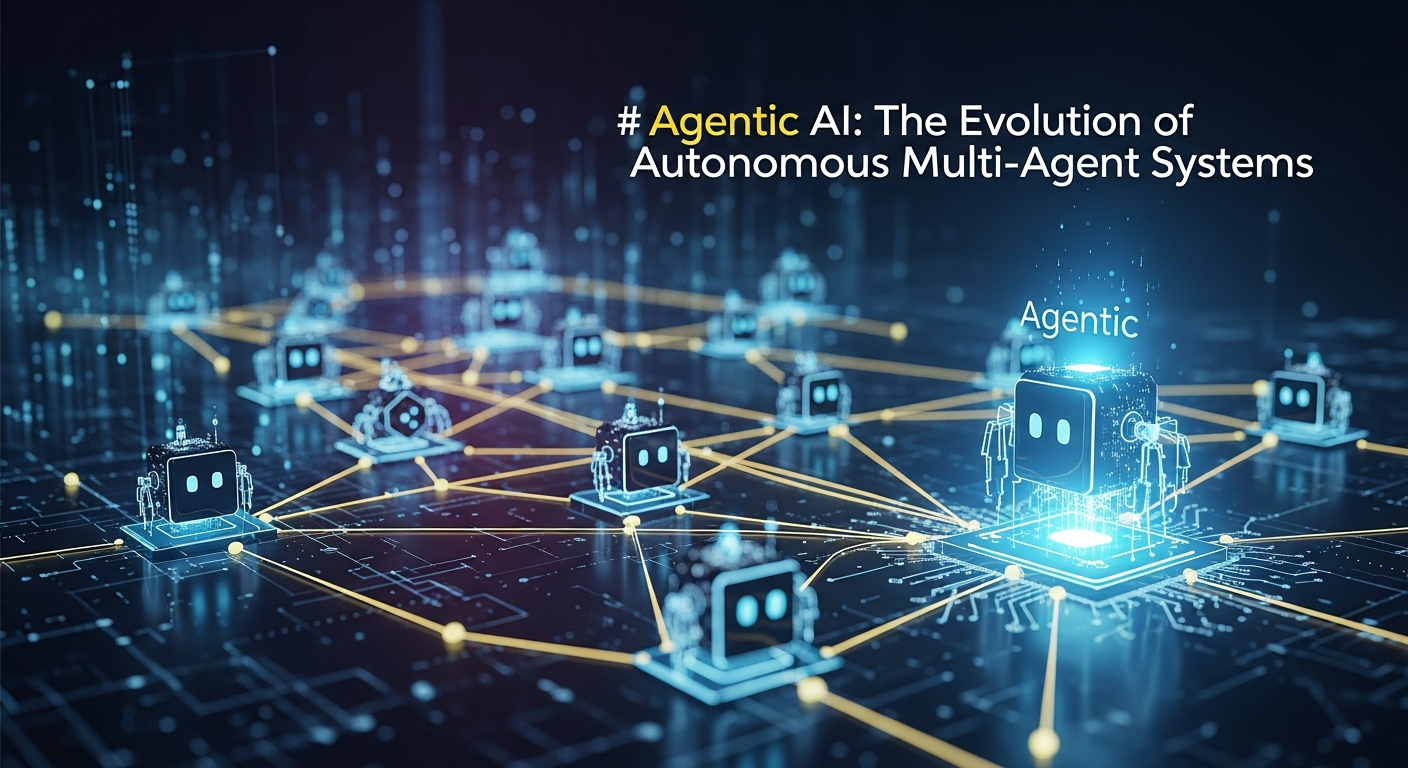
Agentic AI: The Evolution of Autonomous Multi-Agent Systems
The landscape of artificial intelligence is undergoing a profound transformation, moving beyond the static nature of traditional generative models toward a more dynamic paradigm known as Agentic AI. Unlike conventional AI systems that follow linear instructions, Agentic AI represents a sophisticated evolution designed to manage complex goals and adapt to ever-changing environments. Much like the broader evolution of talent acquisition through cognitive AI, these systems shift from simple pattern matching to high-level reasoning and autonomous execution.

Understanding the Taxonomy of Agentic Ecosystems
A critical distinction lies in the conceptual taxonomy of Agentic AI, which separates single, goal-oriented AI Agents from the broader “Agentic” ecosystem. While a standard AI agent might perform a specific, isolated task, Agentic AI signifies a systemic shift characterized by multi-agent collaboration, dynamic task decomposition, and persistent memory.
This allow the system to not just execute a command, but to reason through a problem and refine its approach over time, highlighting the significant potential for Agentic AI and the future of multi-agent autonomy.
Autonomous Workflow Orchestration and Multi-Agent Systems
At the heart of these systems is autonomous workflow orchestration, often facilitated through Multi-Agent Systems (MAS). These frameworks utilize Large Language Models (LLMs) as central reasoning engines that interpret language, plan solutions, and execute actions autonomously.
In complex scenarios such as 3D robotic manipulation, these orchestrators break down high-level objectives into manageable subtasks. These advanced Agentic AI frameworks often employ architectural patterns like MAS or hierarchical reinforcement learning to ensure that various agents can work in concert to achieve a unified goal.
Enhancing Reliability through Agentic RAG
To solve problems effectively, these systems must remain context-aware. This is where Agentic Retrieval Augmented Generation (RAG) becomes essential. By integrating external knowledge retrieval directly into the agentic workflow, systems can access real-time data and specific domain knowledge. This tool orchestration ensures that the AI’s reasoning is grounded in factual, up-to-date information, providing a level of reliability that goes far beyond standard generative outputs.
As Agentic AI continues to mature, the focus remains on building autonomous intelligence capable of navigating the complexities of the real world. By leveraging multi-agent collaboration and robust context-awareness, these systems are redefining the boundaries of automated problem-solving and operational efficiency.


2 Responses
[…] organizations move toward Agentic AI: The Future of Autonomous Multi-Agent Systems, around 75% of surveyed companies are expected to adopt AI technologies within the next five years. […]
[…] of how these intelligent systems operate becomes critical. For instance, the principles behind Agentic AI: The Future of Autonomous Multi-Agent Systems offer insight into the evolving capabilities and implications of such automated decision-making […]